this 20 Day in Morocco Trip itinerary Art Tour History Around from Tangier. One complete loop of Morocco. This is the journey we designed for travelers who want to understand Morocco — not just photograph it. Every city on this route has shaped civilizations. Every landscape tells a geological story. Every village carries a living culture that predates the Arab conquests, the Roman Empire, and in some cases the written word itself.
Beginning and ending in Tangier, this 20-day private tour moves through Morocco’s Atlantic north, sweeps south through the imperial plains to Marrakech, descends to the Atlantic coast at Essaouira and Agadir, crosses the dramatic Tizi n’Test mountain pass — the oldest and most spectacular trans-Atlas road in Morocco — into the Berber heartland, climbs to the High Atlas village of Imlil for a morning hike through mountain communities, crosses the Tizi n’Tichka pass into the desert south, explores the ancient oases of Skoura and the Draa Valley, walks the canyon landscapes of the Dades Valley and Todra Gorge, camps under stars in the Sahara at Merzouga, returns north through the cedar forests of Ifrane to Fes — Morocco’s spiritual and intellectual capital — with a full day trip to the Roman ruins of Volubilis and the imperial city of Meknes, a free day in Fes for a cooking class or deeper exploration, then west to the art-town of Asilah on the Atlantic before closing the circle in Tangier.
This is not a sightseeing checklist. This is Morocco as a complete cultural, historical, geographic, and artistic experience — the Phoenicians, Romans, Berbers, Arabs, Portuguese, French, and the living culture of today, all encountered in their original landscapes. Every day reveals a different layer of one of the world’s most complex and rewarding civilizations.
This 20 Day is the tour for travelers who take Morocco seriously — twenty days, every region, every culture, every landscape, experienced privately with expert guidance and without ever rushing. Tell us your travel dates, group size, and preferred hotel category and we will send your personalized quote within 24 hours.
Route of this 20 day : Tangier → Chefchaouen → Rabat → Casablanca → Marrakech → Essaouira → Agadir → Taroudant → Tizi n’Test → Asni → Imlil → High Atlas → Ait Ben Haddou → Ouarzazate → Skoura → Rose Valley → Dades Gorge → Todra Gorge → Rissani → Merzouga Sahara → Ifrane → Fes → Volubilis → Meknes → Asilah → Tangier
Duration: 20 Days / 19 Nights | Starts: Tangier | Ends: Tangier (hotel, airport, or port) | Type: Private Guided Tour,
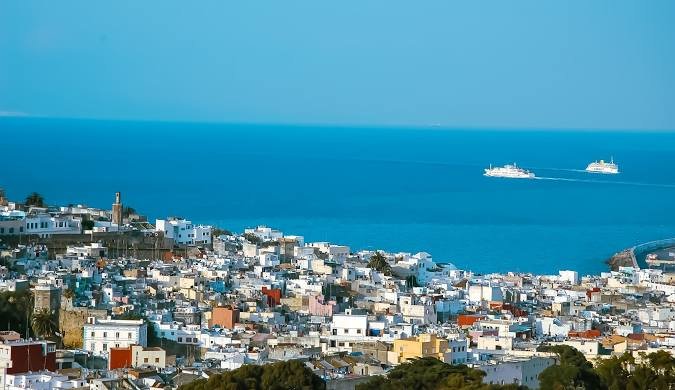
Arrive in Tangier by international flight or ferry from Spain. Your private driver guide meets you at the airport or Tangier Med port. Brief orientation in Tangier — walk the Kasbah and the Petit Socco, the legendary cafe square haunt of Paul Bowles, William Burroughs, and the Beat Generation writers who made Tangier their creative exile. See the panoramic terrace where the Atlantic meets the Mediterranean across the Strait of Gibraltar — just 14 kilometers of water between Africa and Europe, one of the most historically loaded views on earth. Depart Tangier and drive south into the Rif Mountains to Chefchaouen (2.5 hrs). Arrive in the evening. First walk through the blue-painted medina lanes as the lanterns come on.
Overnight: Chefchaouen medina riad
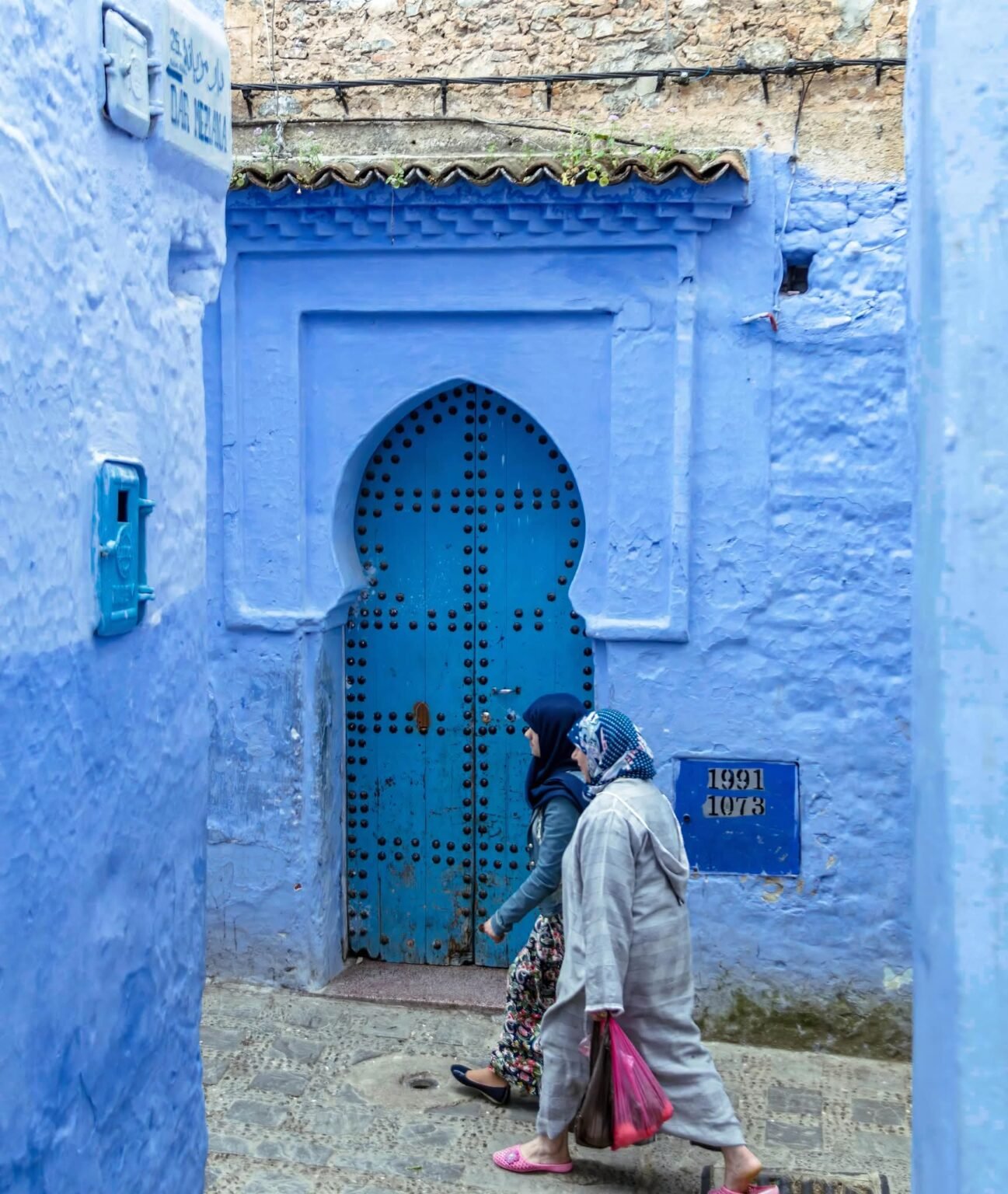
A complete day in Chefchaouen — the blue city of the Rif. Morning guided walk through the medina: the Plaza Uta el-Hammam with its 15th-century Kasbah fortress, the Kasbah Museum displaying Rif Berber art and artifacts, the artisan weaving and dyeing workshops where Berber women produce the famous Rif wool blankets in traditional patterns unchanged for centuries, and the natural spring of Ras el-Ma where the mountain water flows clear from the Atlas limestone. Afternoon free — hike the surrounding Rif hills, visit the Andalusian-influenced architecture of the upper medina, or simply sit in a blue doorway and observe. Sunset from the Spanish mosque viewpoint.
Cultural note: Chefchaouen was founded in 1471 by Moulay Ali Ben Moussa Ben Rached as a refuge for Muslims expelled from Andalusia. Its blue walls — painted in varying shades of indigo, cobalt, and sky — are a living expression of that Andalusian heritage, still maintained by the families who have lived here for generations.
Overnight: Chefchaouen medina riad
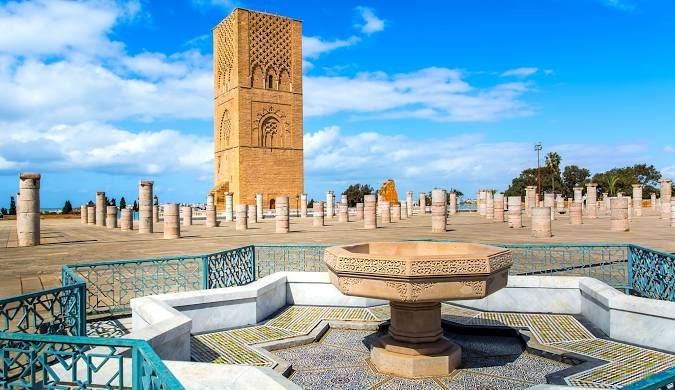
Drive west and south from Chefchaouen to Morocco’s capital, Rabat (3 hrs). Visit the Hassan Tower — the unfinished 12th-century minaret of the Almohad Caliph Yacoub al-Mansour, intended to be the tallest minaret in the Islamic world — and the adjacent Mohammed V Mausoleum, a masterpiece of 20th-century Moroccan craftsmanship. Walk the Kasbah of the Udayas — a 12th-century Almohad fortress with a garden of extraordinary Andalusian design. Visit the Chellah — a walled necropolis layering Roman Sala Colonia (1st century), Marinid tombs (14th century), and an active stork colony — one of the most remarkable sites of civilizational layering in North Africa. Optional visit: the Mohammed VI Museum of Modern and Contemporary Art — the finest art museum in Morocco. Lunch in Rabat. Drive to Casablanca (1 hr).
Overnight: Casablanca city hotel
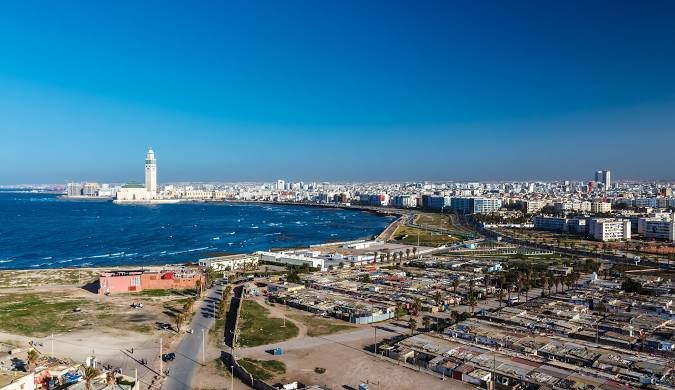
Morning in Casablanca. Guided walking tour of the city’s extraordinary Art Deco and Mauresque architecture — the buildings of the French Protectorate era (1912–1956) that blend Moroccan Islamic motifs with European Modernist form in a style found nowhere else in the world. Visit the Cathédrale du Sacré-Coeur (now an art space), the Mohammed V Square with its classical arcade, and the Villa des Arts contemporary gallery. Then the centerpiece: the Hassan II Mosque — built over the Atlantic on an artificial promontory, with a retractable roof and a minaret of 210 meters, the tallest religious structure in Africa. The guided interior visit is one of the most extraordinary architectural experiences in Morocco. After the visit, drive south to Marrakech (2.5 hrs). Arrive midday. Check into your riad. Evening walk on the Djemaa el-Fna.
Overnight: Marrakech medina riad
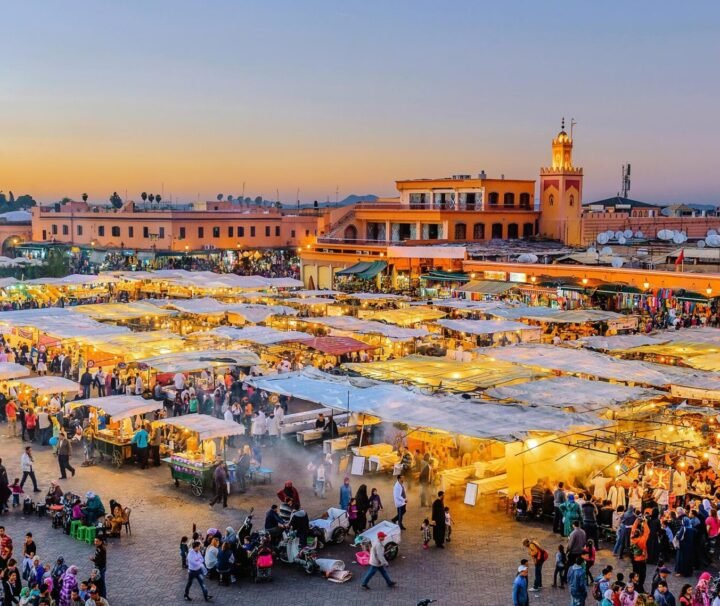
A complete guided day in Marrakech with your local medina expert. Morning: the Djemaa el-Fna — a UNESCO Intangible Cultural Heritage site, one of the world’s great open-air theatres; the Koutoubia Mosque (1158 AD, the architectural model for the Giralda in Seville and the Hassan Tower in Rabat); the Bahia Palace — a 19th-century vizier’s palace of 160 rooms, with hand-painted cedarwood ceilings, zellij tile floors, and garden courtyards representing the full peak of Moroccan court art; the Saadian Tombs — the royal mausoleum of the Saadian dynasty, sealed behind a wall for two centuries and rediscovered in 1917, with extraordinary carved stucco and Italian Carrara marble. Afternoon: the medina souks — the dyers’ souk, the spice souk, the silver souk, the carpet souk, the lantern souk — each occupying the same street it has occupied for 600 years. Lunch in the medina. Evening on the Djemaa el-Fna as it transforms into its nocturnal spectacle.
Overnight: Marrakech medina riad
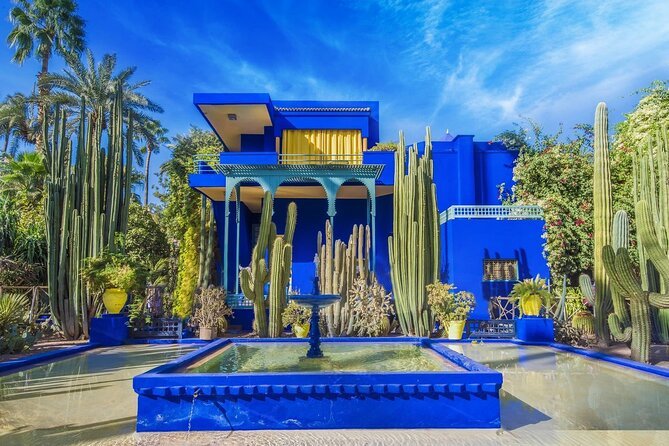
A second day in Marrakech focused on art and deeper exploration. Morning visit to the Majorelle Garden — the cobalt-blue artist’s garden created by French painter Jacques Majorelle between 1924 and 1962, rescued from development by Yves Saint Laurent and Pierre Bergé in 1980, and now home to the Berber Museum — the world’s finest collection of Amazigh (Berber) art, jewelry, textiles, and cultural objects. Adjacent: the Musée Yves Saint Laurent Marrakech, a world-class fashion museum exploring Saint Laurent’s 40-year relationship with Morocco and its influence on his work. Afternoon free: optional traditional hammam experience, a Moroccan cooking class in the medina, deeper exploration of the Mellah Jewish quarter and its 16th-century synagogues, or simply wandering the streets of the medina independently. This is intentional free time — one of the most rewarding things you can do in Marrakech is get slightly lost.
Overnight: Marrakech medina riad
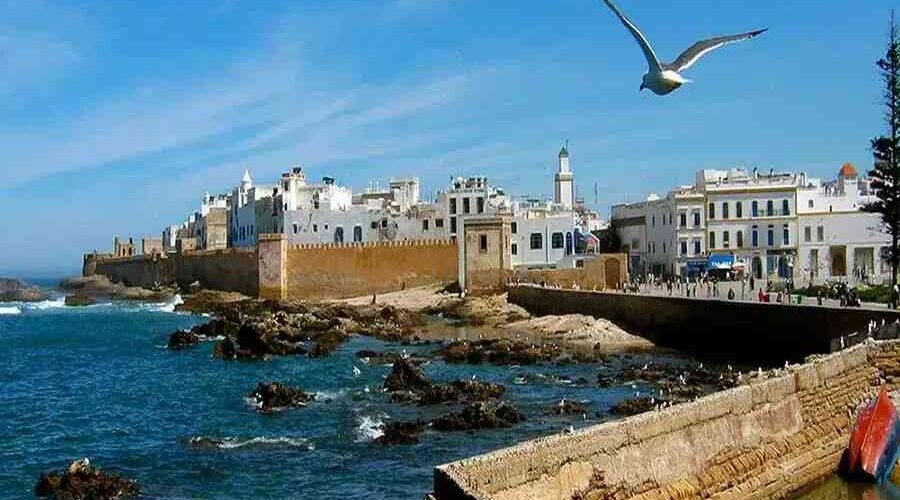
Morning free in Marrakech — a final souk visit, a coffee on the Djemaa el-Fna, or a last look at the Koutoubia. Lunch in the medina. After lunch, drive northwest through the argan tree forest — the ancient Arganeraie Biosphere Reserve, a UNESCO-listed landscape unique to southwestern Morocco where Berber women’s cooperatives press argan oil by hand using stone mills inherited from their grandmothers — to Essaouira on the Atlantic coast. Arrive in the late afternoon. Walk the sea ramparts at dusk. Essaouira at sunset, with the Atlantic crashing against the 18th-century Portuguese-designed walls and the light turning the white medina gold, is one of the finest arrivals in Morocco.
Overnight: Essaouira medina riad
A complete guided day in Essaouira — one of the most culturally layered cities in Morocco. Morning with your guide: the sea ramparts and Skala de la Ville — the Portuguese-designed coastal battery with its bronze cannons still pointing to sea — the blue-painted fishing port and working harbor where blue boats have gone out before dawn for centuries — the medina souks with their thuya woodworking ateliers (craftsmen carving fragrant thuya burl into furniture, chess sets, and decorative objects using techniques passed down for generations) — and the art galleries of the medina, many showing Gnawa-influenced painting and Moroccan contemporary art. Afternoon: visit the Gnawa music experience — Essaouira is the capital of Gnawa music in Morocco, a spiritual-trance tradition brought north by Sub-Saharan enslaved peoples centuries ago and now recognized as UNESCO Intangible Cultural Heritage. Lunch of fresh grilled fish at the port grill stalls. Afternoon free on the wide Atlantic beach.
Cultural note: Essaouira was the Phoenician trading post of Mogador, then a Roman port, then a Portuguese fortress, then an 18th-century Moroccan imperial port city designed by a French-Moroccan architect, then a haven for Jimi Hendrix and the hippie generation in the 1960s. Its walls contain 3,000 years of Atlantic trade history.
Overnight: Essaouira medina riad
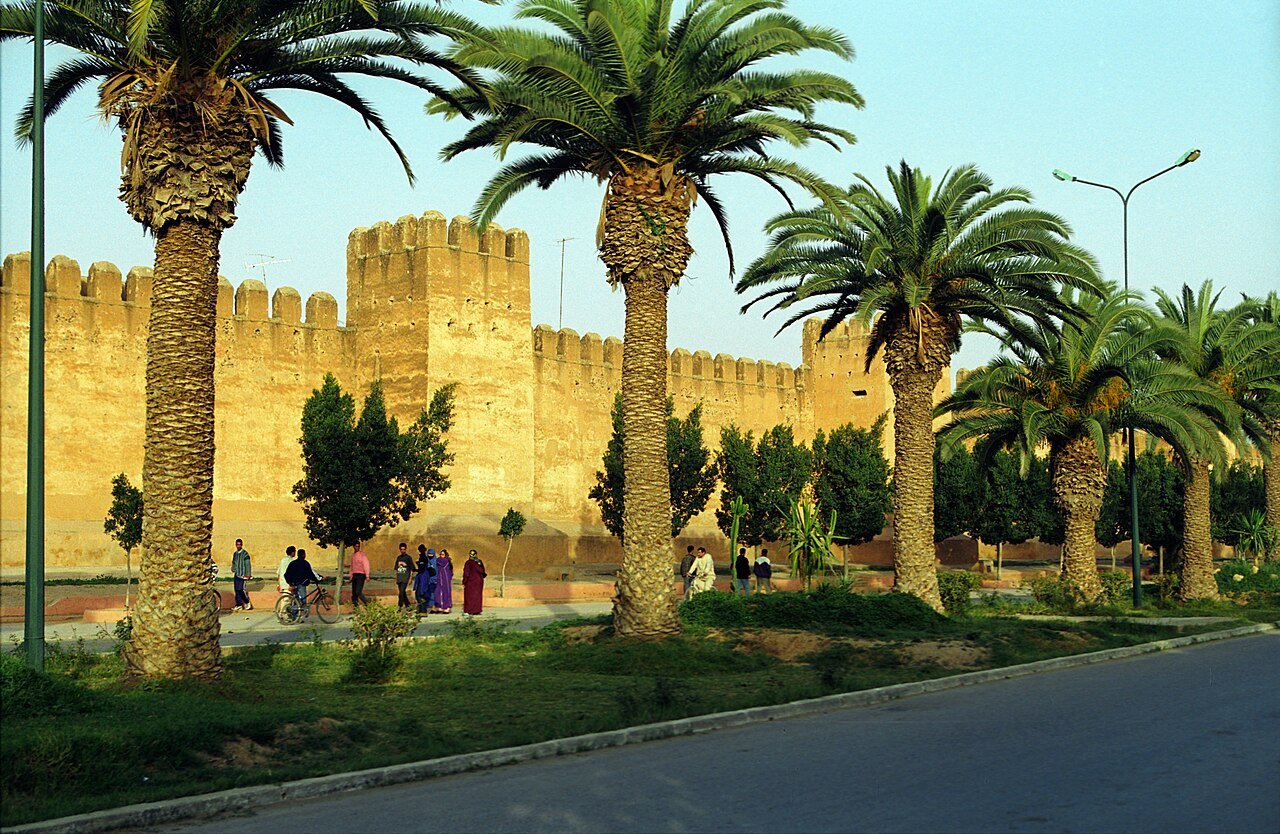
Morning departure south along the Atlantic coast to Agadir (2.5 hrs). The city was almost entirely destroyed by an earthquake in 1960 and rebuilt as Morocco’s first modern resort city — its old Kasbah hill still bears the Arabic inscription “God, Country, King” carved into the ruins above the bay. Brief visit to the Agadir Oufella ruins for the panoramic view over the bay. Continue inland to Taroudant (1.5 hrs) — the ancient capital of the Souss Valley and one of Morocco’s most complete medieval walled cities, its 16th-century earthen ramparts still intact for 7 kilometers. Taroudant is known as “Little Marrakech” for its similar red-earthen architecture and vibrant souks, but with a fraction of the visitors. Afternoon guided walk through Taroudant’s two souks: the Arab souk and the Berber souk — two distinct market cultures in a single city. Visit the tanneries and the local silver jewelers.
Overnight: Taroudant riad or hotel
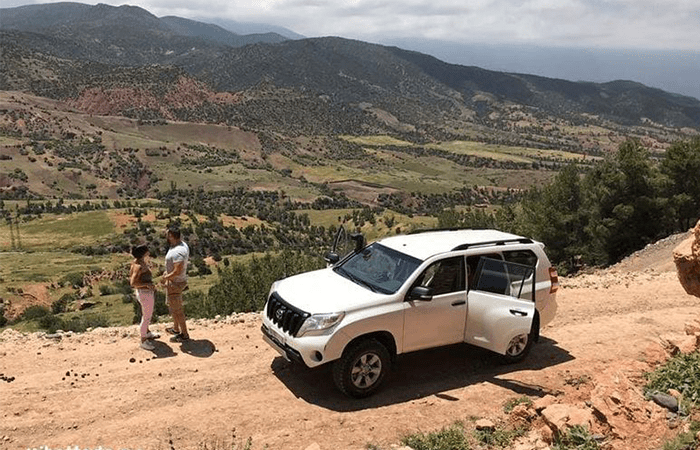
One of the most extraordinary driving days in all of Morocco. Depart Taroudant north through the Souss Valley. Begin the ascent of the Tizi n’Test Pass (2,092m) — the oldest trans-Atlas road in Morocco, built partly on ancient Almohad routes, with hairpin bends of extreme drama and views of the entire Souss plain stretching to the Atlantic far below. Stop at the Tin Mal Mosque — built in 1153 by the Almohad dynasty at the very source of their 12th-century empire, one of the most historically significant mosques in Moroccan history and one of the only mosques in the country that non-Muslims may enter. It stands in a remote mountain valley in a state of sublime ruin. Continue north descending through the High Atlas to Asni — a weekly Berber market town in the foothills — and up the mountain road to Imlil (1,740m). Arrive in this traditional High Atlas Berber village as the afternoon light falls across the Toubkal massif. Check into your mountain guesthouse. Berber family dinner.
Cultural note: The Tizi n’Test is not a tourist road — it is one of the most demanding mountain drives in Morocco and one of the most rewarding. Allow a full morning. The road follows the same routes used by Almohad armies, Berber traders, and salt caravans for over 800 years.
Overnight: Imlil mountain guesthouse
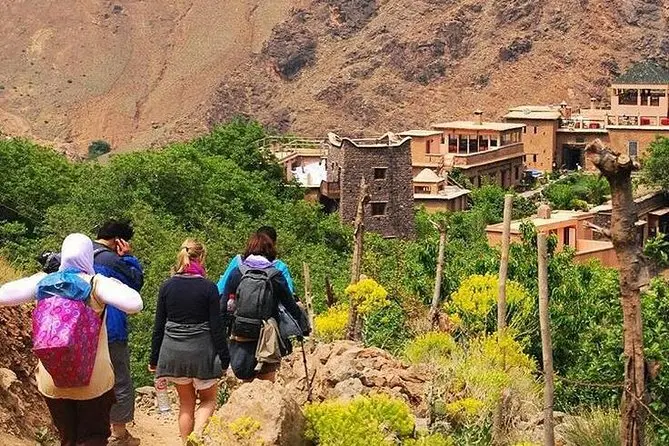
Morning guided hike from Imlil with a local Berber mountain guide. The route leads through the traditional High Atlas villages of Aroumd (1,900m) and Tamatert (2,000m) — stone and earthen houses terraced into the mountain slope, surrounded by walnut orchards, barley fields, apple trees, and ancient irrigation channels called seguias that have watered these fields for centuries. The views from the ridge above Aroumd look back across the entire valley system with Jebel Toubkal (4,167m) — the highest peak in North Africa — towering above. The hike takes 2.5–3 hours at a gentle pace and requires no technical fitness. This is not adventure tourism: it is a walk through a living Berber agricultural community, accompanied by a guide who was born in one of these villages and whose family still farms here. Afternoon free in Imlil — rest on the guesthouse terrace, explore the village market, or simply watch the light change on the mountain.
Cultural note: The Amazigh (Berber) communities of the High Atlas have farmed these valleys for at least 3,000 years. Their architecture, agricultural systems, and social organization pre-date Islam in Morocco by millennia and represent one of the oldest continuous living cultures in North Africa.
Overnight: Imlil mountain guesthouse
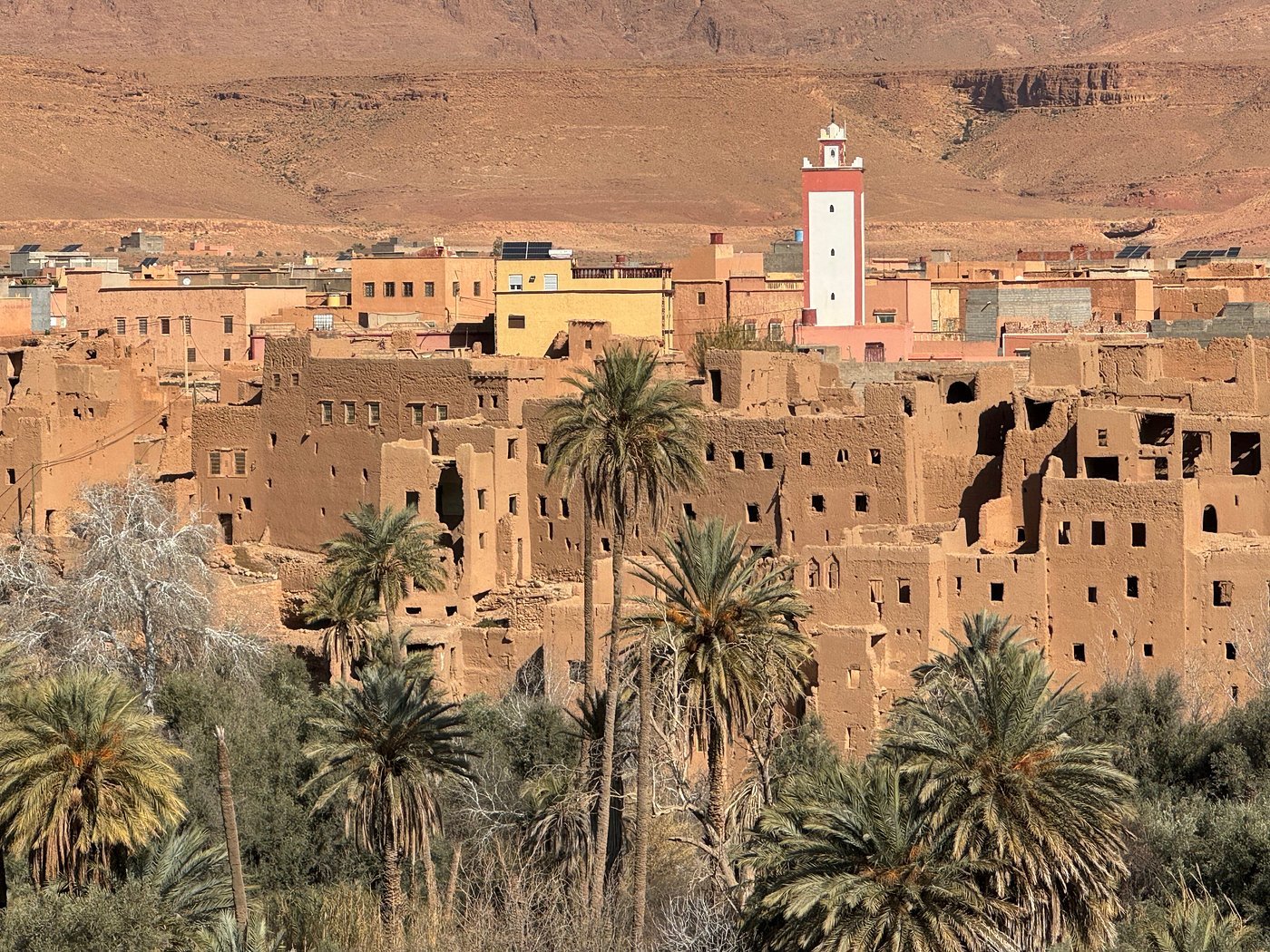
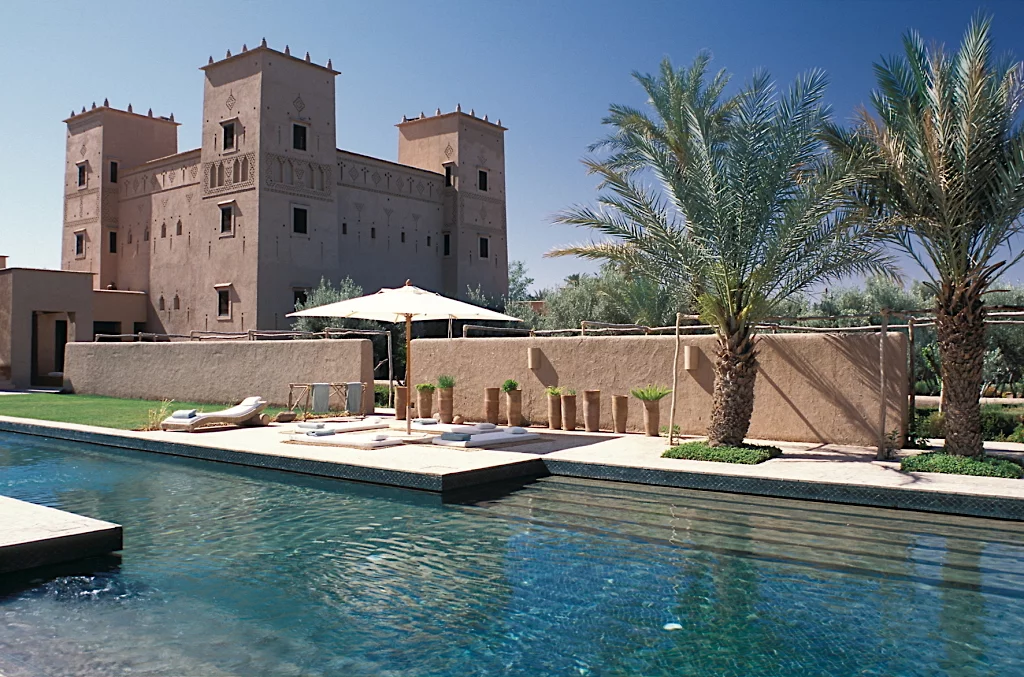
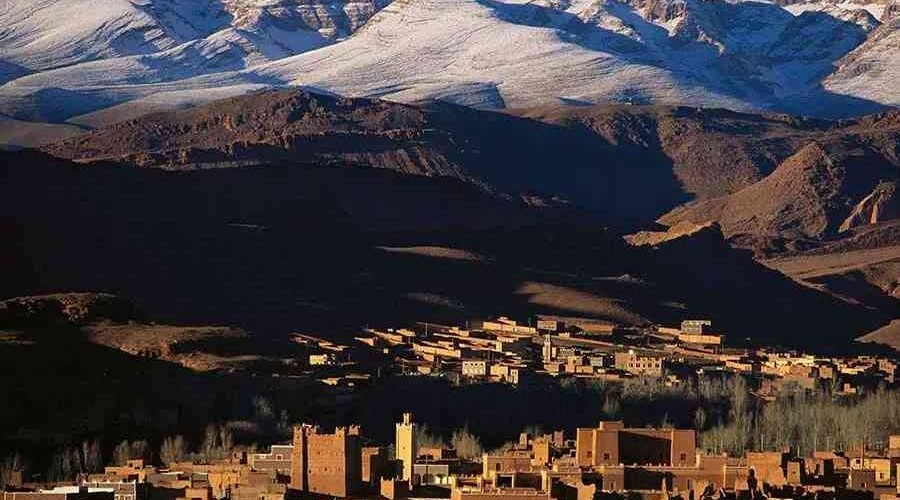
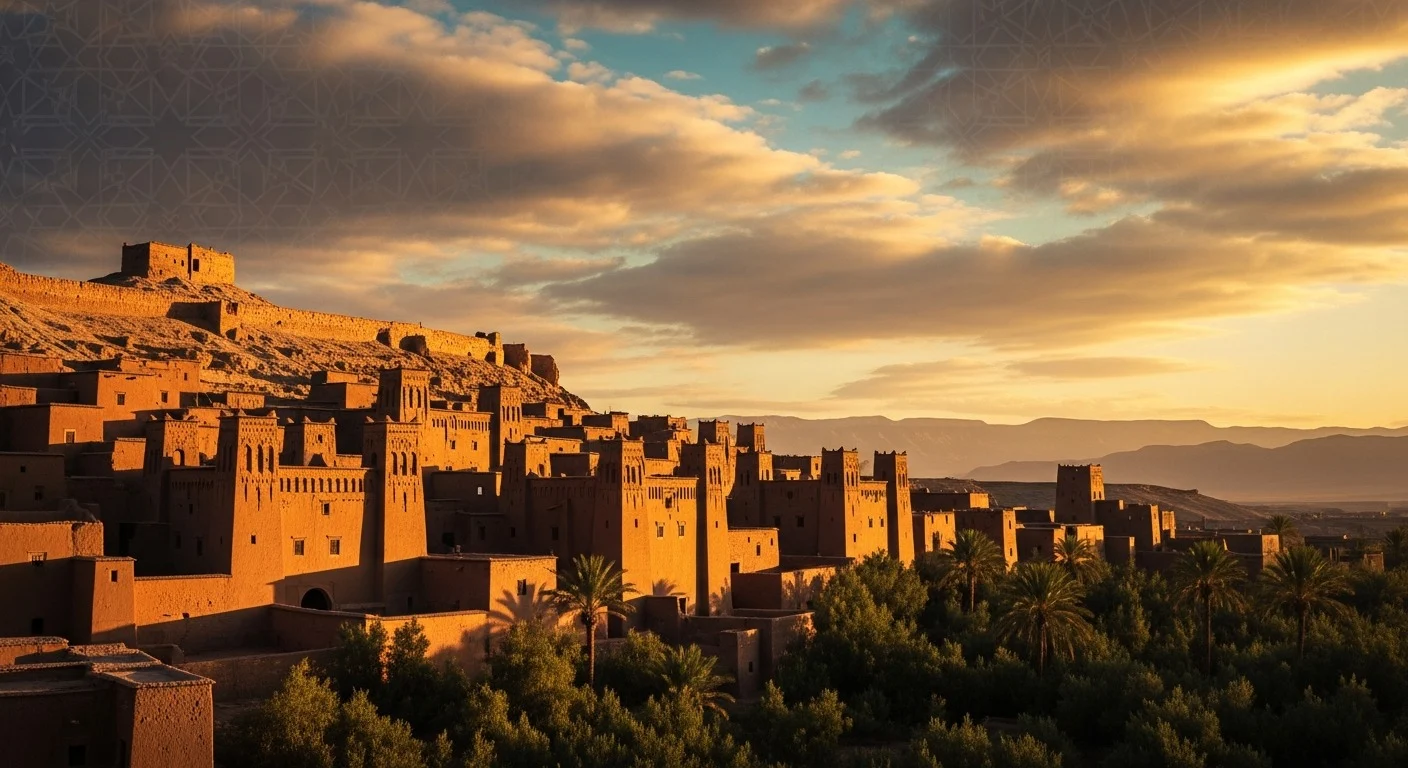
Descend from Imlil to Marrakech (1 hr) and continue east on the road toward the High Atlas. Begin the ascent of the Tizi n’Tichka Pass (2,260m) — Morocco’s highest paved road, a spectacular mountain highway through dramatic Berber villages perched on the ridgelines, with views of snow-capped peaks and deep gorges. Cross the pass and descend into the pre-Saharan landscape. Visit the UNESCO World Heritage kasbah of Ait Ben Haddou — a fortified ksar of earthen towers rising from the desert plain, inhabited continuously for centuries and used as a film location for Lawrence of Arabia, Gladiator, The Mummy, Game of Thrones, and Babel. Guided walk through the ksar with its layers of Berber architectural history. Continue to Ouarzazate: visit Atlas Film Studios — one of the world’s largest film studios, built in this Moroccan desert city because its light, its landscapes, and its traditional architecture can stand in for ancient Egypt, biblical Jerusalem, medieval Persia, and post-apocalyptic futures with equal conviction — and Kasbah Taourirt, the finest urban kasbah in the south. Late afternoon drive east to Skoura — a vast palm oasis in the Draa Valley. Check into your kasbah hotel amid the palms.
Overnight: Skoura kasbah hotel
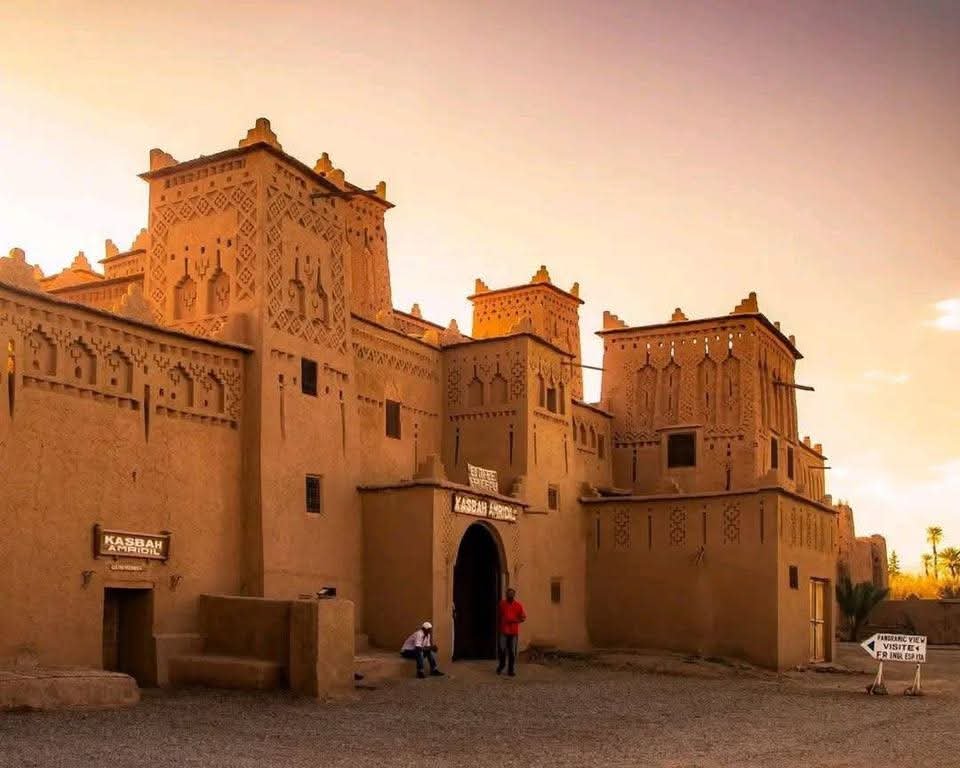
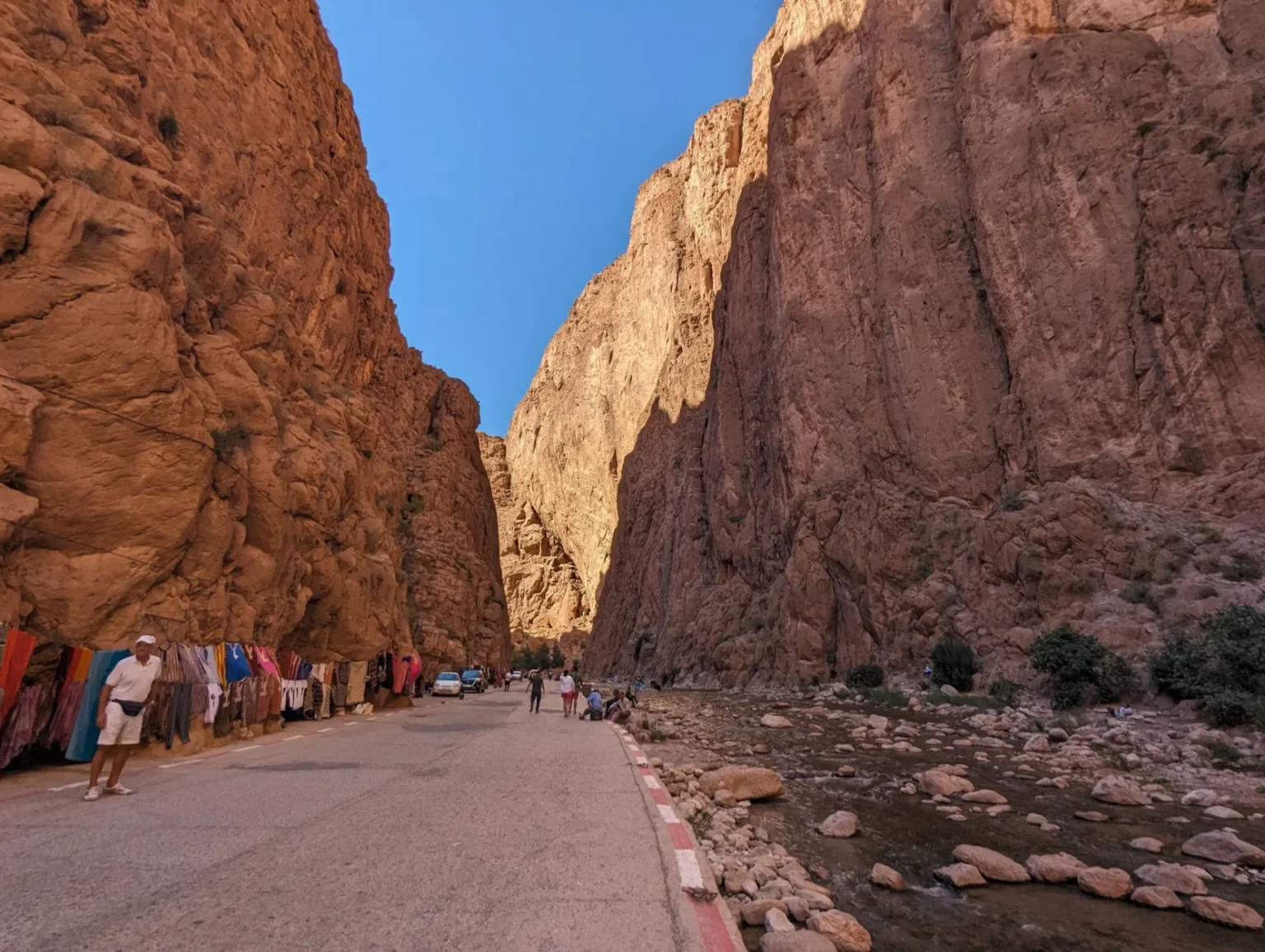
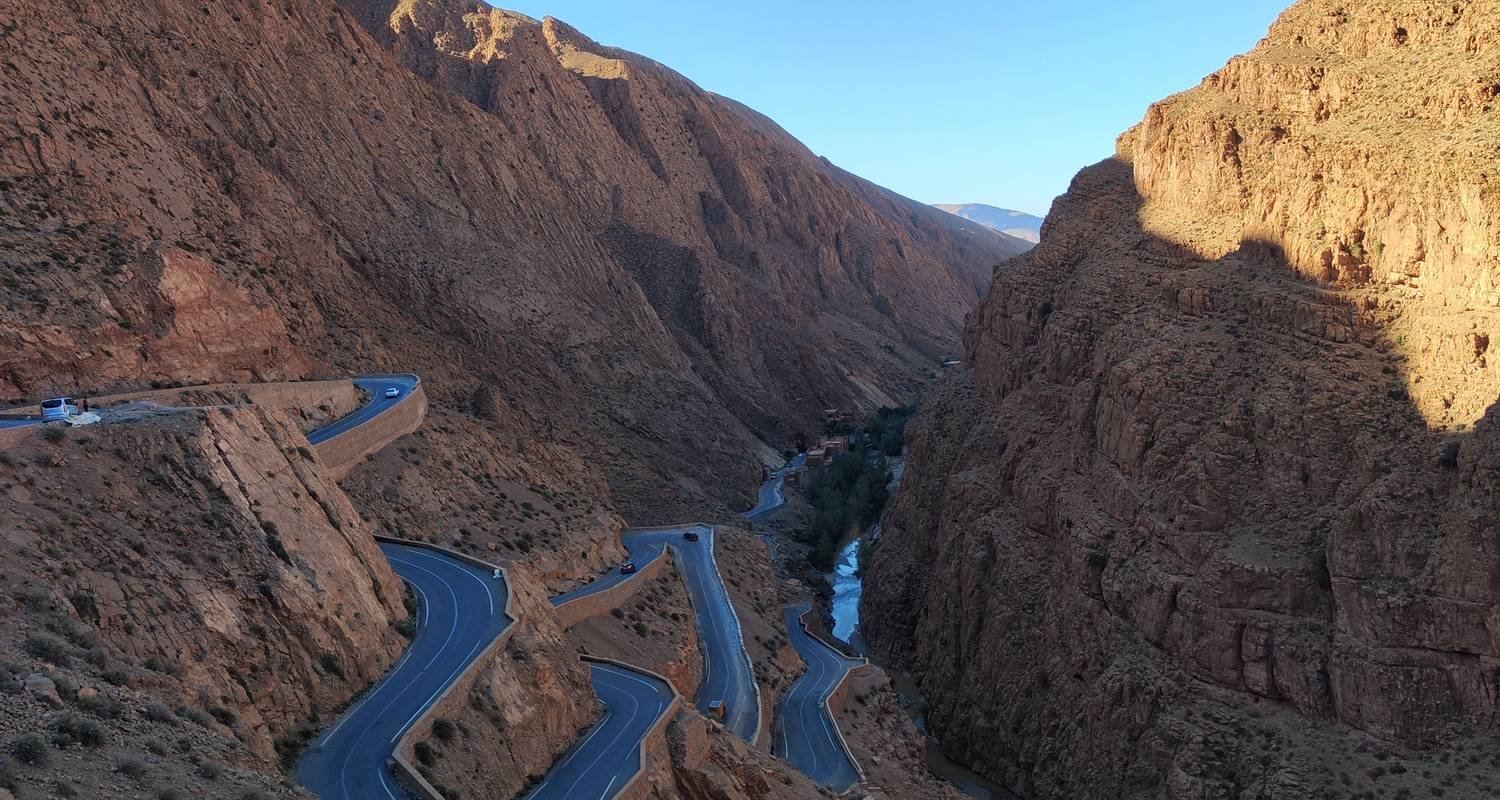
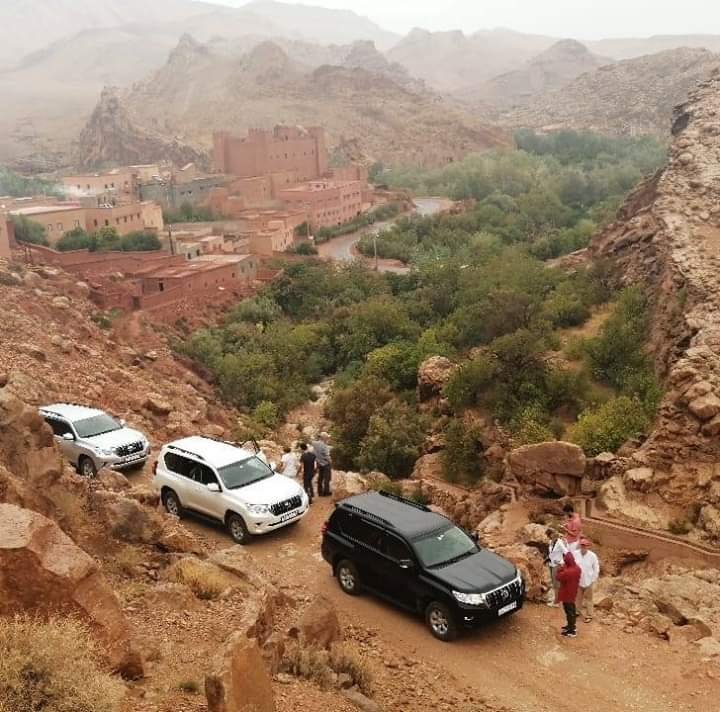
A day of extraordinary geological and cultural landscapes. Morning walk through the Skoura oasis — a 5,000-hectare date palm grove laced with ancient seguia irrigation channels and historic earthen kasbahs. Visit Kasbah Amridil — one of the most perfectly preserved kasbahs in Morocco, still partially inhabited by the same family that built it in the 17th century. Drive east through the Valley of Roses — the Dadès Valley floor where Damask roses (Rosa damascena) are cultivated in vast fields by Berber families using techniques unchanged for centuries. The roses are harvested each April and May by hand and distilled into rose water and rose oil for the global perfume industry — Morocco produces more rose essence than any country except Bulgaria. Visit a local rose cooperative and a traditional distillery. Continue into the dramatic Dades Gorge — a canyon of extraordinary red rock formations sculpted by erosion into towers, fins, and walls of stone, with ancient kasbah villages perched in the cliffs above the river. Afternoon arrival at Todra Gorge — walk the canyon floor between 300m walls of pale limestone, the river running cold between them. Dinner and overnight in the gorge.
Overnight: Todra Gorge hotel
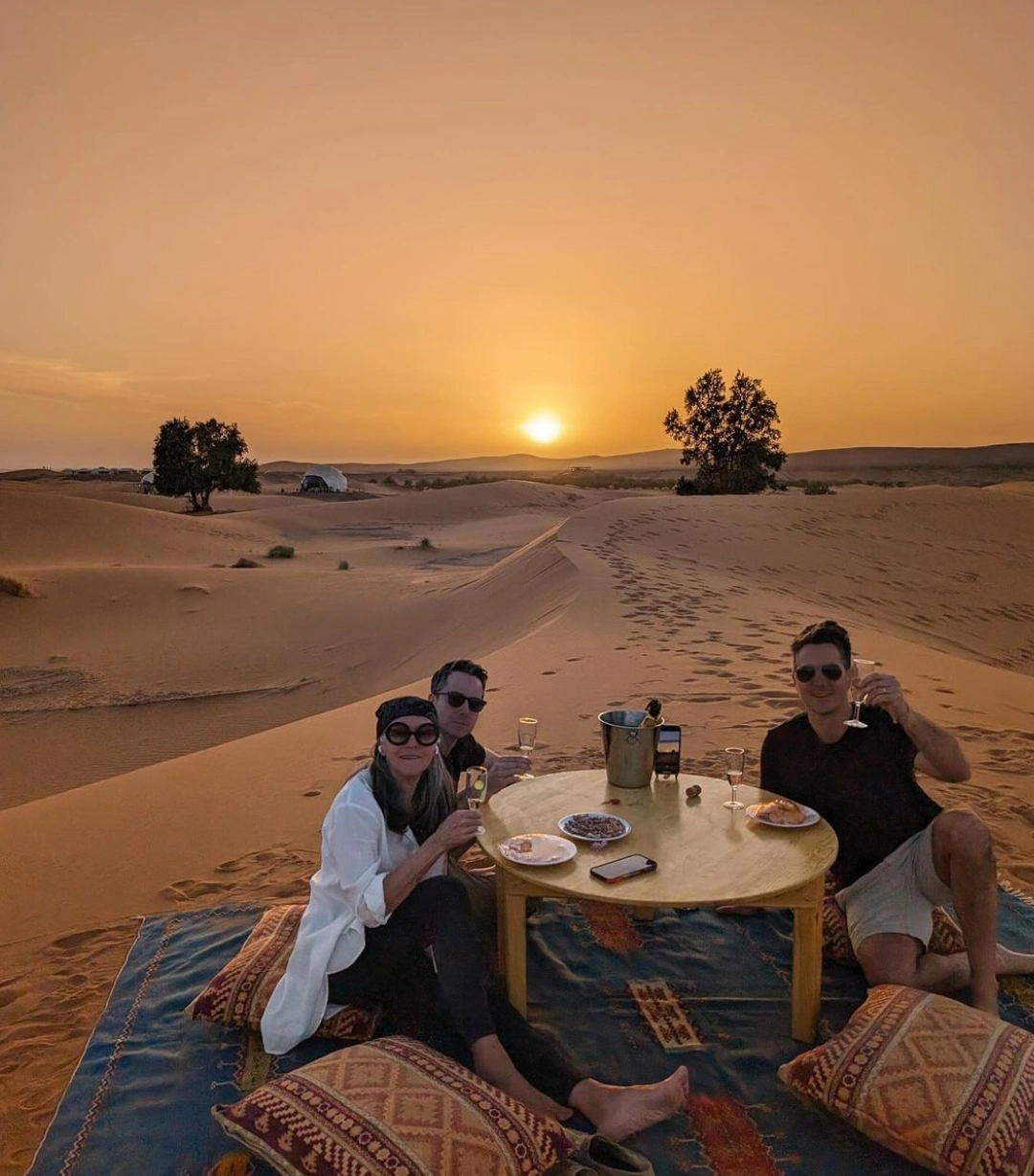
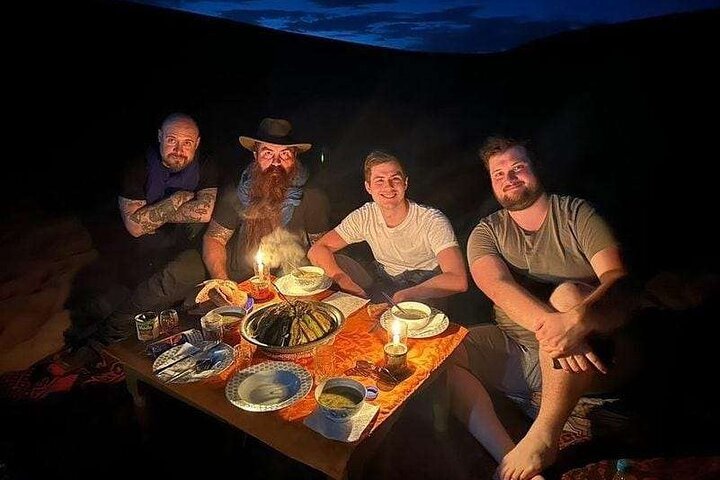
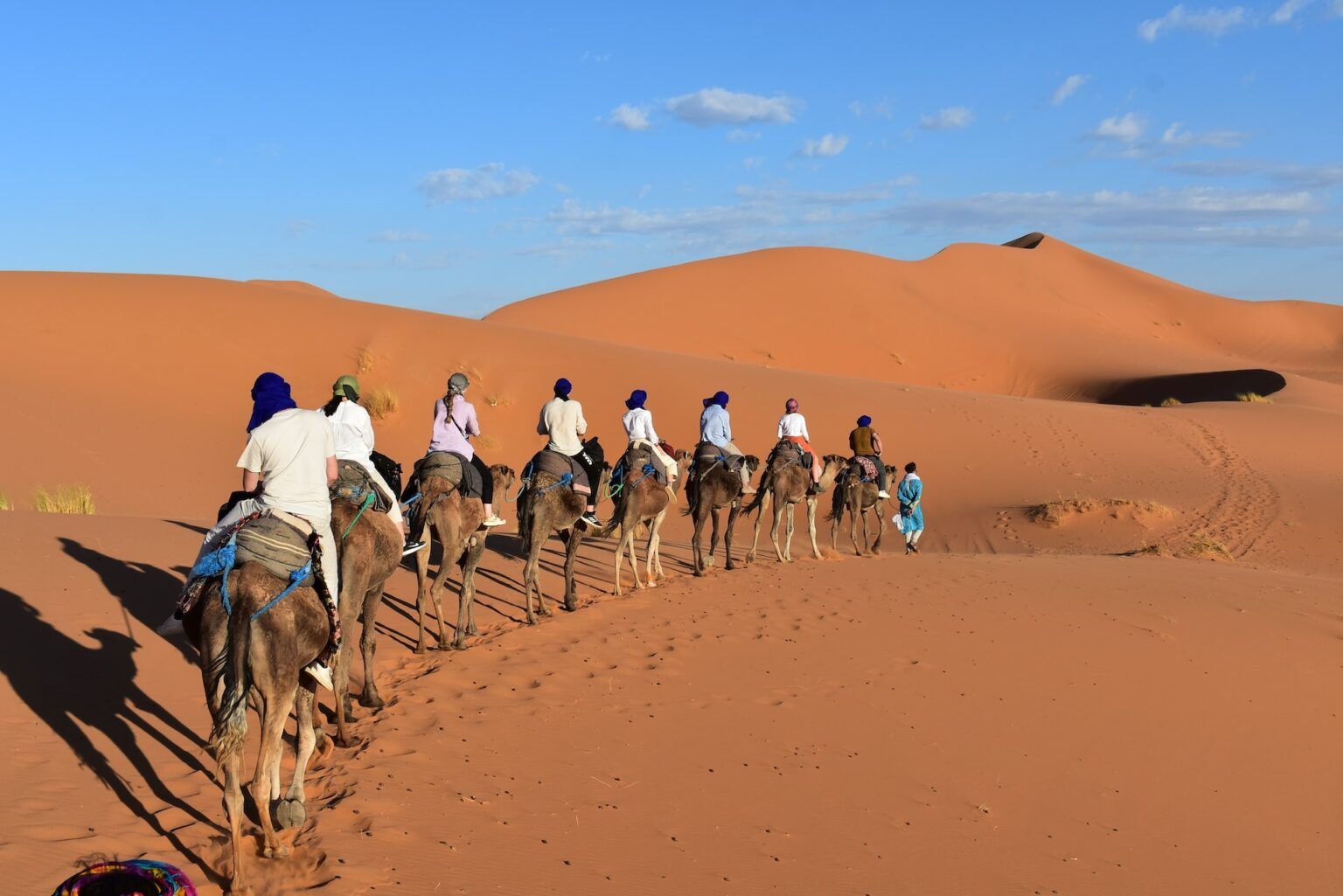
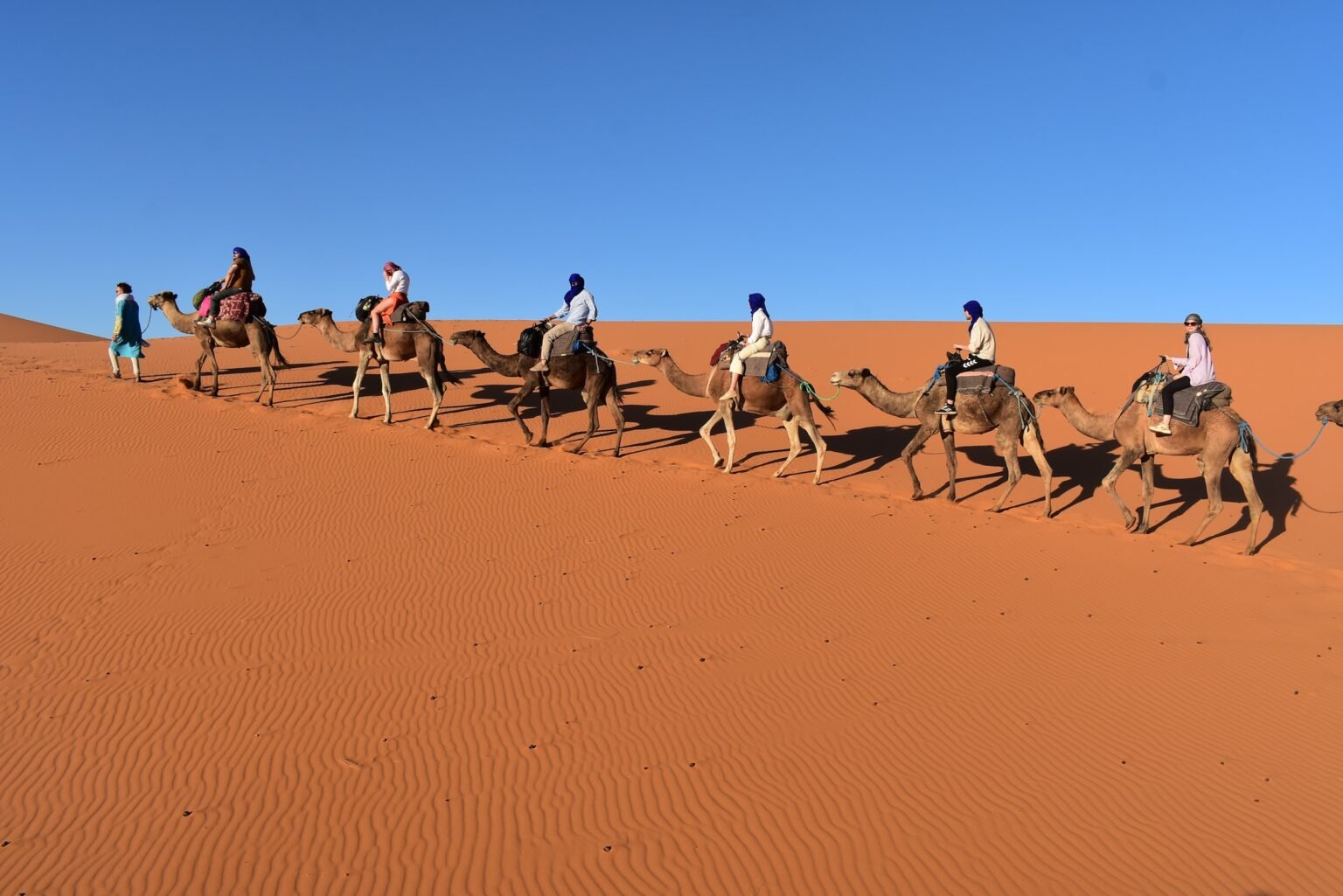
Morning at leisure in the Todra Gorge at dawn — the canyon in early morning light, before the day visitors arrive, is a place of extraordinary silence and scale. After breakfast, drive east through the ancient oasis heartland of the Tafilalt. Pass through Tinjdad and Tinejdad. Continue to Rissani — the historic oasis capital of the Tafilalt and the birthplace of the Alaouite dynasty that has ruled Morocco continuously since 1666. Visit the Rissani souk — one of the most authentic and atmospheric rural markets in all of Morocco, held on Sunday, Tuesday, and Thursday. Browse the date sellers, the leather goods, the pottery, and the live animal market. Visit the Zaouia of Moulay Ali Cherif — the mausoleum of the Alaouite founding ancestor. Continue east to Merzouga. Arrive at the edge of the Sahara in late afternoon. Mount your camel for the sunset trek into the Erg Chebbi dunes. Arrive at your luxury desert camp as the sky turns crimson. Traditional Moroccan dinner by firelight with live Gnawa drumming under the stars.
Overnight: Luxury desert camp, Erg Chebbi
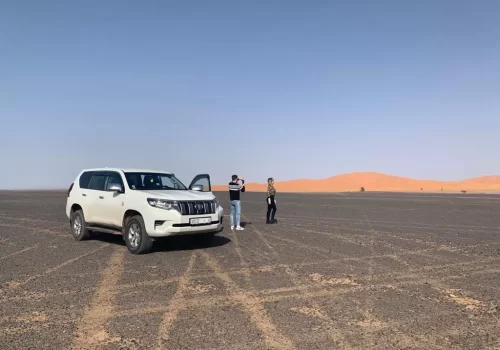
Wake before sunrise for the dawn over the Erg Chebbi — the light builds slowly from behind the dunes in layers of pink, orange, copper, and gold. Camel ride back to Merzouga village after breakfast. The day is entirely yours. Active options: guided 4×4 dune excursion deep into the Sahara to the areas inaccessible on foot; sandboarding down the great dune faces; visit to Khamlia — the village of the Gnawa people, Sub-Saharan descendants who were brought to Morocco centuries ago and have preserved their trance-music and ritual healing tradition in this remote desert community. Cultural options: visit a traditional Berber nomad family in their goat-hair tent near the dunes — tea, conversation, and a glimpse of the oldest continuous way of life in the Sahara; explore the fossil and mineral market of Erfoud — the surrounding Tafilalt is one of the world’s richest deposits of marine fossils from the Devonian era (400 million years ago). Relaxed option: rest. The Sahara is one of the greatest places in the world to do nothing.
Overnight: Merzouga hotel
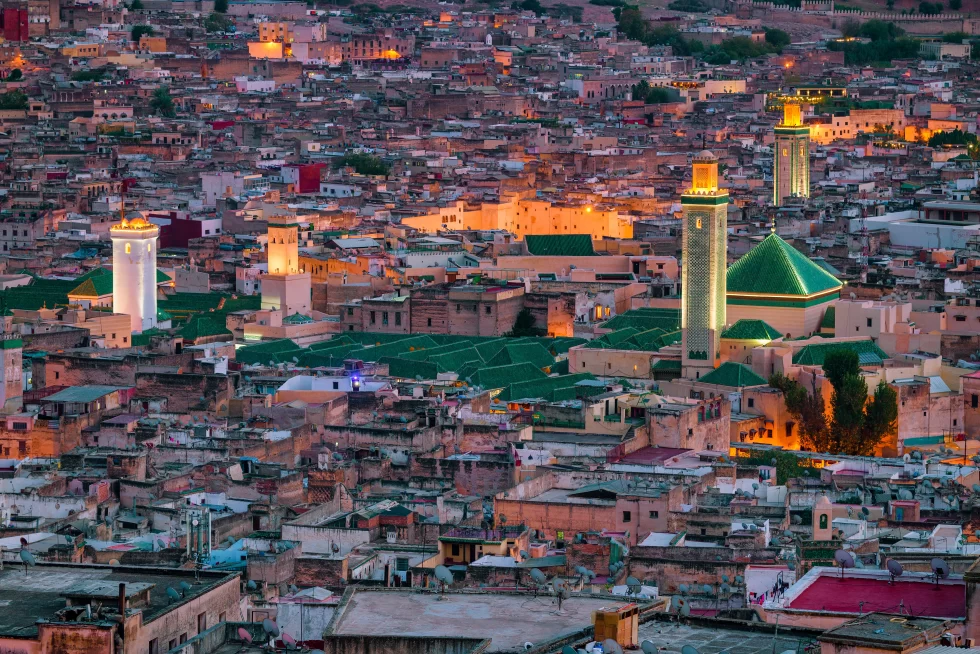
Morning departure north from the Sahara. Drive through the Tafilalt oasis and up through the dramatic Ziz Gorge — a deep canyon lined with hundreds of thousands of date palms following the river north into the Middle Atlas. Cross the Middle Atlas plateau. Stop in Ifrane — Morocco’s alpine town, built by the French in the 1930s in the style of a Swiss mountain village, at 1,665m altitude surrounded by cedar forest and ski slopes. Continue to Azrou and the cedar forest where Barbary macaques (Macaca sylvanus) — one of the last wild populations of this species outside of Gibraltar — roam freely through the ancient Atlas cedars and sometimes descend to the road. Continue north to Fes. Arrive in the late afternoon. Check into your medina riad. Evening walk through Fes el-Bali — the lantern-lit medieval city at night is unlike anything in the world.
Overnight: Fes medina riad
A complete guided day in Fes el-Bali — a UNESCO World Heritage Site and the world’s largest living medieval city, its street plan and social organization unchanged since the 9th century. Your licensed local guide leads you through the full depth of the medina: the Chouara Tanneries — the ancient leather dyeing complex best seen from the terraces of the surrounding leather shops, its honeycomb of stone vats unchanged in method since the 12th century; the Bou Inania Madrasa (1350–1357) — the finest example of Marinid religious architecture in Morocco, with extraordinary carved stucco, cedar latticework, and zellij tilework covering every surface; the Al-Attarine Madrasa (1323) adjacent to the Kairaouine Mosque — a 14th-century masterpiece of compressed magnificence; the Kairaouine Mosque and University — founded in 859 AD by Fatima al-Fihri, a woman from a Tunisian merchant family, the oldest continuously operating university in the world, predating Oxford by 200 years; the spice souk, the henna souk, the brass and copper market, and the Mellah — the ancient Jewish quarter with its distinctive overhanging wooden balconies and the 17th-century Ibn Danan synagogue. Lunch at a traditional Fassi riad restaurant. Afternoon free in the Andalusian quarter.
Overnight: Fes medina riad
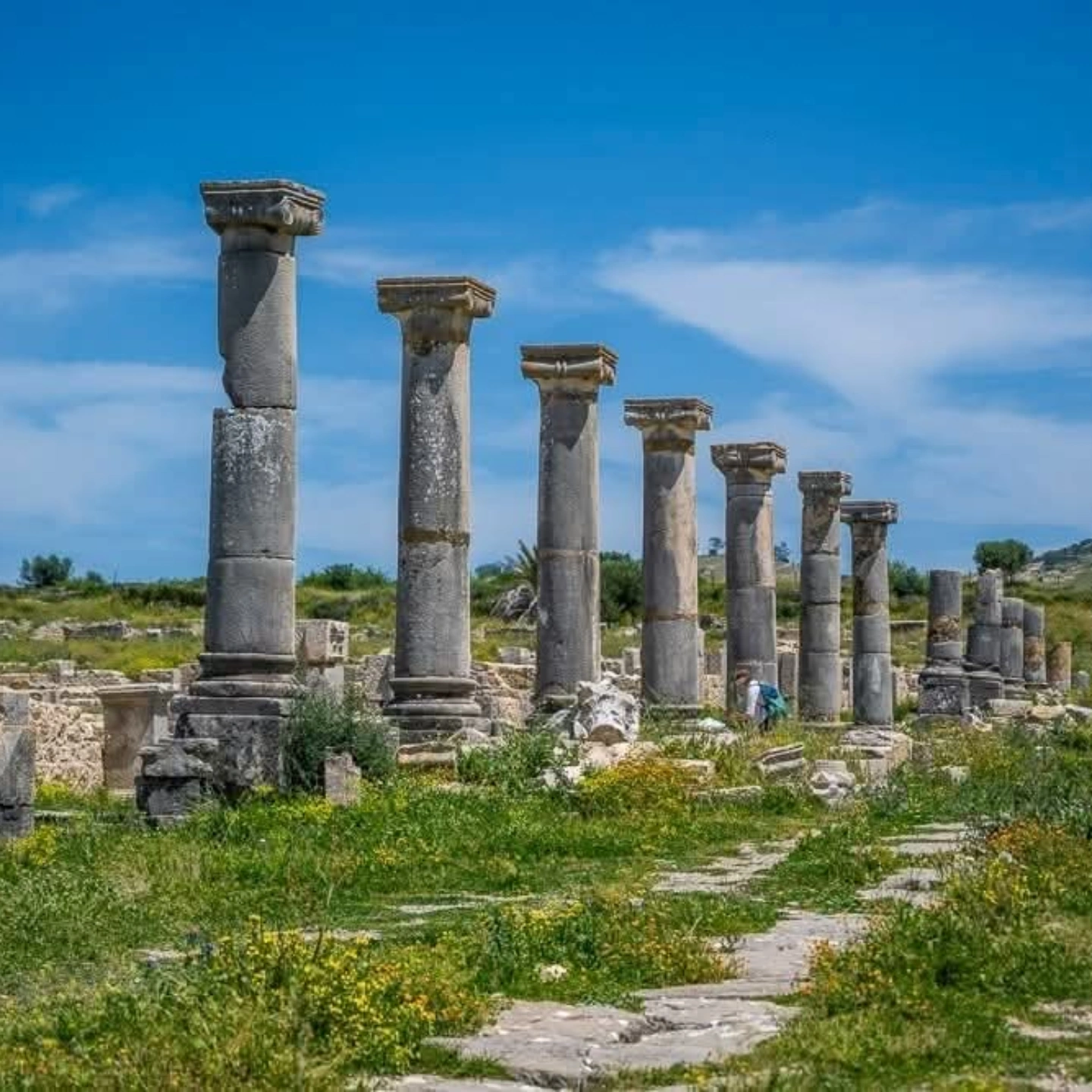
A full day excursion from Fes into three of the most historically significant sites in Morocco. Morning drive to Volubilis (1 hr from Fes) — Morocco’s finest Roman city and a UNESCO World Heritage Site. Walk the ancient forum, the Triumphal Arch of Caracalla (217 AD), the Capitol, the House of Orpheus, and the extraordinary floor mosaics — mythological scenes in tesserae of extraordinary color and detail, preserved by centuries of soil. Volubilis was the western capital of Roman Mauretania and later the seat of the Idrisid dynasty that founded Morocco as a state. Continue to Moulay Idriss Zerhoun — perched dramatically on twin volcanic hills above the plain, Morocco’s holiest pilgrimage town, home to the tomb of Moulay Idriss I, the great-great-grandson of the Prophet Muhammad who came to Morocco in 789 AD and founded the first Arab-Islamic state in the country. Lunch in Moulay Idriss. Afternoon in Meknes — Sultan Moulay Ismail’s 17th-century imperial capital, built with a labor force of 30,000 Christian slaves and 25,000 horses to rival Versailles: the monumental Bab Mansour gate, the vast Heri es-Souani royal granaries, the Place el-Hedim, and the medina. Return to Fes for a farewell dinner.
Overnight: Fes medina riad
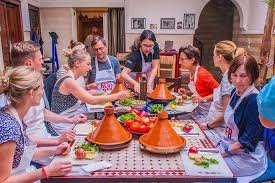
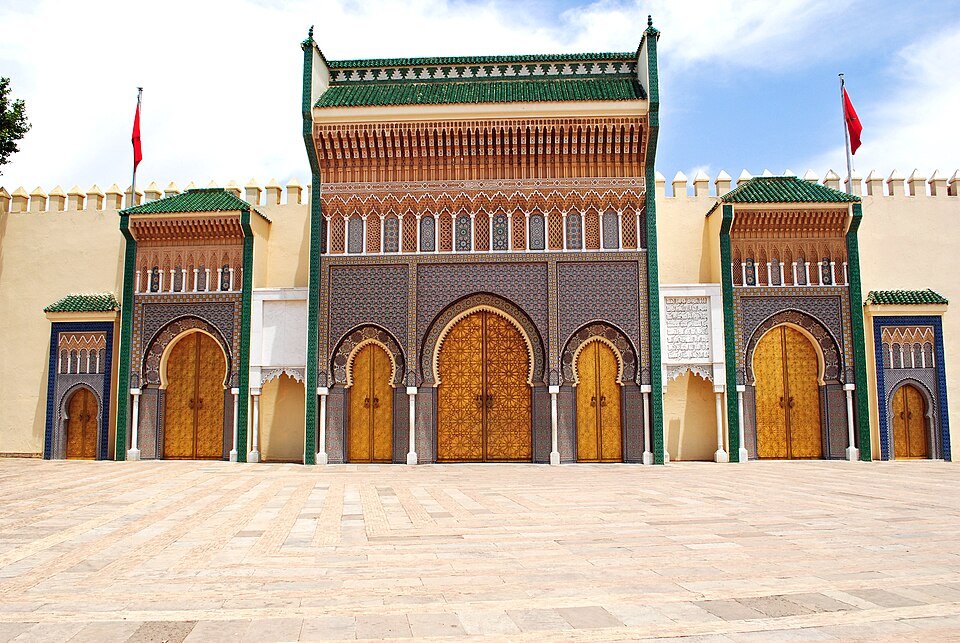
A second free day in Fes — use it as you wish. Option A — Fassi Cooking Class: join a local chef for a morning visit to the Bab Bou Jeloud souk to buy ingredients — saffron, preserved lemons, smen (aged butter), argan oil, fresh herbs — followed by a hands-on cooking class in a traditional riad kitchen learning to prepare bastilla (the celebrated pigeon or chicken pastry in paper-thin warqa pastry), tagine, harira, and sellou. Lunch is the class itself. Fassi cuisine is widely considered the most refined and complex in all of Morocco — this is the city where the country’s culinary tradition was essentially invented and codified. Option B — Free Exploration: return to Fes el-Bali independently — the medina reveals more each time. Revisit the Chouara Tanneries in different light, spend time in the Andalusian quarter across the river (less visited and deeply beautiful), explore the Fes el-Jdid district with its Royal Palace gate and Mellah, visit the Batha Museum of Moroccan decorative arts, or simply walk without a plan. Afternoon free. Farewell dinner in Fes.
Overnight: Fes medina riad
Morning departure north from Fes along the Atlantic highway. Stop in Asilah — Morocco’s most artistically significant small city, a whitewashed Atlantic port town whose medina walls become a gallery each summer when the Asilah Arts Festival (Moussem Culturel International d’Asilah) invites artists from across the world to paint enormous murals directly onto the medina walls. Walk the Portuguese ramparts (1471), the medina lanes with their year-round murals, and the Place Zellaqa. Lunch in Asilah. Continue north to Tangier (45 minutes). Closing visit to the city where the journey began: the Kasbah Museum — housed in the former Sultan’s palace, with collections of Moroccan art, prehistoric artifacts, and Roman objects — and the Petit Socco, where the ghosts of the Beat Generation still sit in the café chairs. Your driver guide transfers you to your hotel, the Tangier port, or Tangier Ibn Battuta Airport. The tour ends here — completing a full geographic, cultural, and historical circle of Morocco.
Tour ends in Tangier — hotel, airport, or port as arranged
Who is this tour designed for?
Perfect for travelers seeking a deeper understanding of Morocco’s culture, history, architecture, and local life, rather than simply visiting the main sights.
Is this tour physically demanding?
No. Most days involve easy walking and sightseeing. The Imlil hike is a gentle 2–3 hour walk suitable for most travelers.
Why is the Tizi n’Test Pass special?
It is Morocco’s oldest trans-Atlas route, offering spectacular mountain scenery and access to the historic Tin Mal Mosque, a key site of the Almohad Empire.
What is Khamlia Village in Merzouga?
Khamlia is known for its Gnawa music heritage, where visitors can experience traditional rhythms and cultural performances unique to the Sahara region.
Why is the cooking class in Fes recommended?
Fes is Morocco’s culinary capital. The class offers a hands-on introduction to traditional Moroccan recipes and local food culture.
Can this tour be adjusted for a smaller budget?
Yes. Accommodation categories, desert camp options, and selected activities can be adjusted to suit your budget.
Can I start the tour in Casablanca instead of Tangier?
Yes. The itinerary can be customized to match your arrival and departure flights.
What is the best time of year for this tour?
Spring (March–May) and autumn (September–November) offer the most comfortable weather and beautiful landscapes across Morocco.
How does the tour end in Tangier?
The tour can conclude at your hotel, Tangier Airport, or Tangier Med Port, depending on your travel plans. Raed More
Choose the comfort level that best fits your travel style. Both options follow the exact same incredible itinerary and include your private vehicle, driver, and local guides.
Stay in hand-picked, authentic 3-star and 4-star traditional Riads and hotels. Perfect for travelers wanting comfort, local charm, and great value.
Upgrade to premium 4-star and 5-star boutique Riads and high-end hotels. Features larger rooms, excellent amenities, and enhanced comfort.
Premium Upgrade Available: Want to experience Morocco like royalty? Contact our team for a custom quote to upgrade your tour to our Ultra-Luxury Tier. This includes world-class 5-star luxury palaces and VIP glamping in the Sahara Desert.
occupancy during the standard travel season. Final pricing may vary depending on your exact travel dates (such as peak holiday seasons like Christmas, New Year's, and Easter) or for solo travelers requesting private rooms.
You cannot copy content of this page