How Amazigh Women Make Carpets: The Art of Traditional Moroccan Rugs and Handicrafts
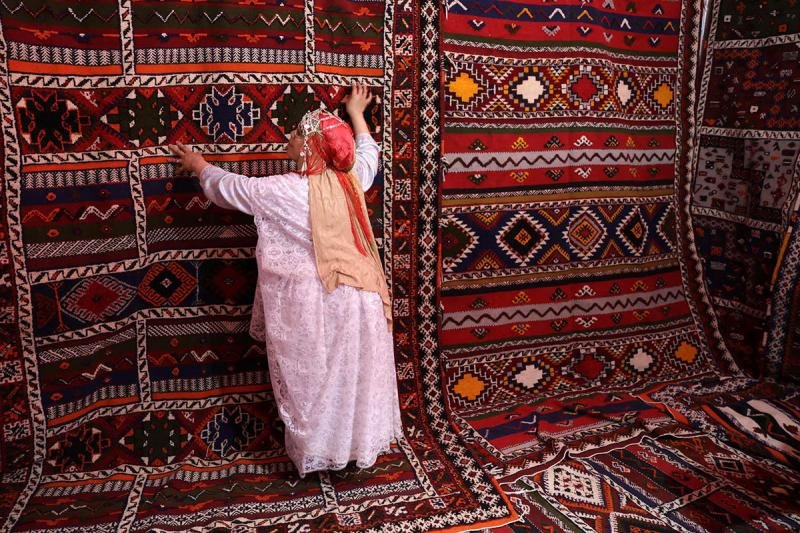
Amazigh Morocco Women Make Carpets; Every Moroccan carpet starts with a flock of sheep and ends with a woman’s hands. Across the Atlas, Amazigh weavers turn wool into rugs that keep homes warm, decorate weddings and carry the stories of their families. It is one of Morocco’s most beautiful living traditions.
the Amazigh Womens Make Carpets: Traditional Moroccan Rugs and Handicrafts
Weaving as a Family Art
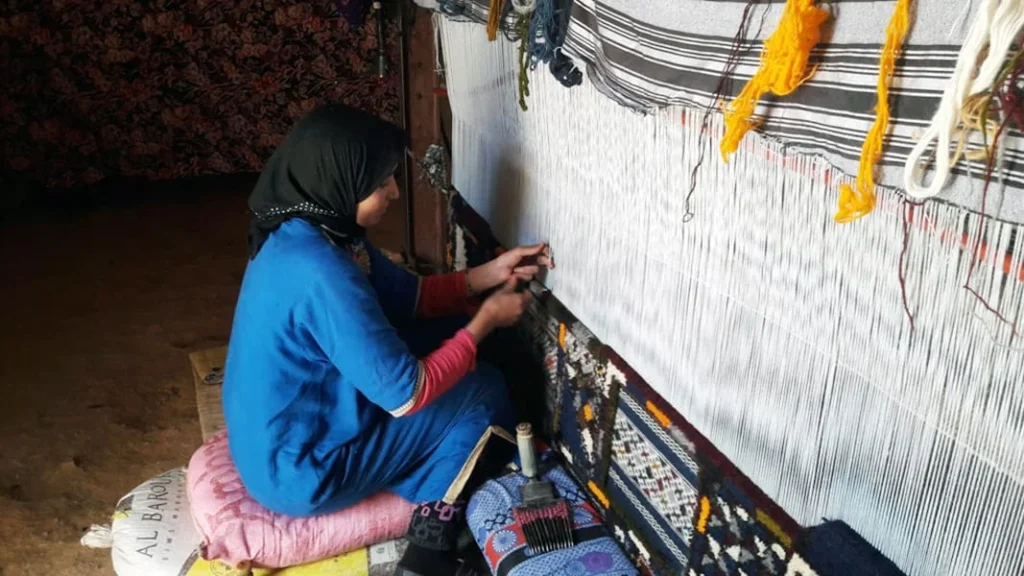
Weaving is mainly women’s work and is passed from mothers to daughters. Girls often learn by watching, then start with small pieces. A finished carpet may warm the family home, form part of a bride’s trousseau or provide income for school costs and household needs.
Table of Contents
- Weaving as a Family Art
- From Sheep to Rug: How Amazigh Women Make Carpets
- Famous Carpet Regions and Styles
- The Language of Symbols and Colors
- Women’s Cooperatives: Craft and Independence
- Other Traditional Handicrafts
- How to Buy an Authentic Rug
- FAQ’s
From Sheep to Rug: How Amazigh Women Make Carpets
Step 1: Wool
Wool comes from local sheep, shorn in spring. It is sorted and washed in streams or basins and dried in the sun.
Step 2: Carding and Spinning
Women comb the wool with hand carders and spin it into thread using a hand spindle, a skill that takes years to master.
Step 3: Natural Dyes
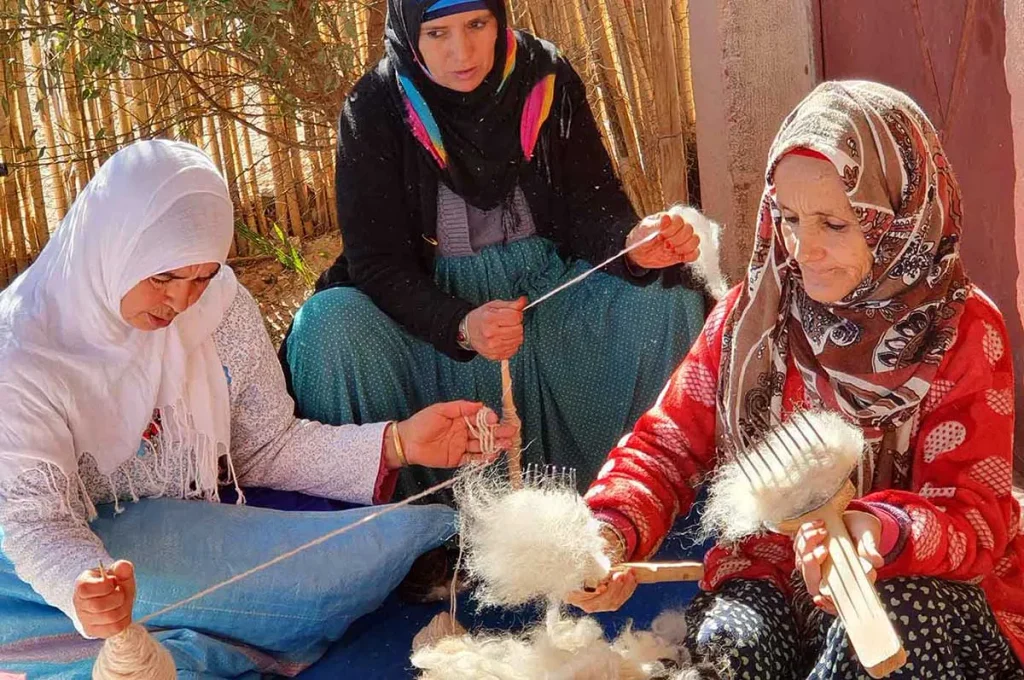
Many weavers use plant and mineral dyes. Common sources include pomegranate, henna, indigo, saffron and madder, which give warm reds, oranges, yellows, blues and earthy browns. Some rugs stay in the natural cream, brown and gray of the wool.
Step 4: Setting Up the Loom
The warp threads are stretched on a wooden loom, often set up in a home or courtyard.
Step 5: Weaving
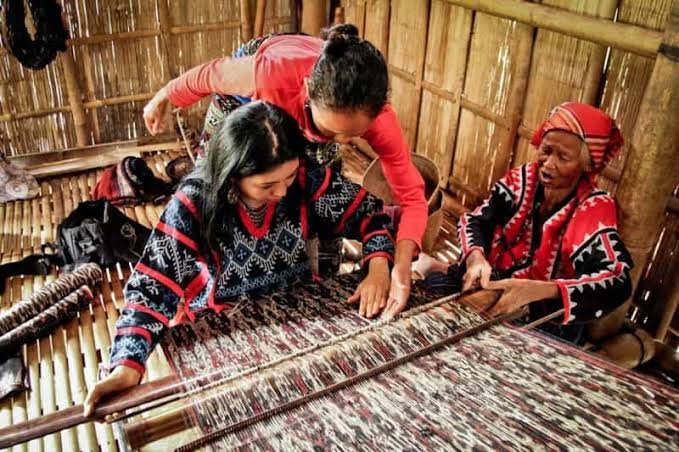
Weavers build the design row by row, knotting a pile or weaving a flat surface, depending on the style. Many work from memory and feeling rather than a drawn pattern. A single carpet can take two to four weeks, depending on size.
Step 6: Finishing
The rug is cut from the loom, trimmed, washed and dried in the sun.
Famous Carpet Regions and Styles
| Style | Region | Look |
|---|---|---|
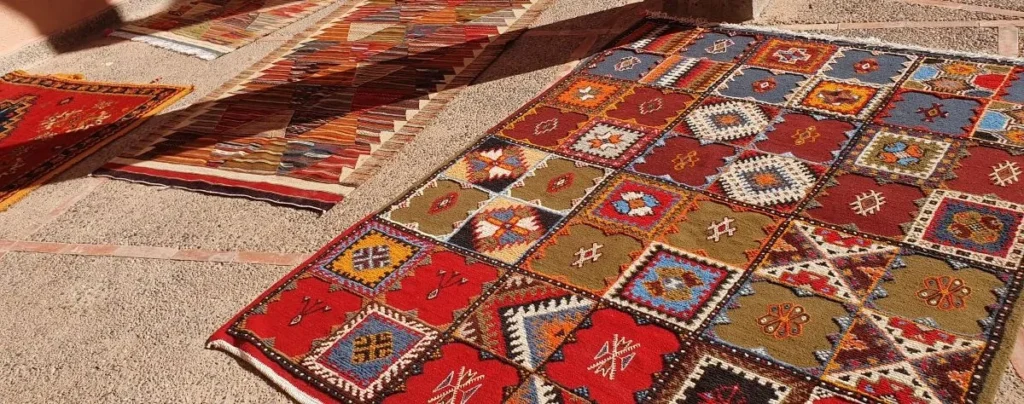
| Beni Ourain | Middle Atlas | Thick, soft, cream with dark lines |
| Berber Village | Central High Atlas | Light, playful, bright colors and free forms |
| Taznakht / Ouaouzguit | Siroua, Ouarzazate | Rich reds, saffron and green, crisp borders |
| Zemmour, Zayane | Middle Atlas | Strong reds and lattice diamonds |
| Boucherouite | Beni Mellal, Azilal, Marrakech villages | Recycled fabric, modern and joyful |
Nearly fifty tribes are said to weave their own variations, so each region has its own character.
The Language of Symbols and Colors
Many motifs, such as diamonds, zigzags and lines, are linked to protection, fertility, water and family identity. Their exact meaning varies from tribe to tribe and from weaver to weaver. Many Amazigh women say a rug reflects their feelings and creativity as much as tradition, and each piece is unique.
Women’s Cooperatives: Craft and Independence
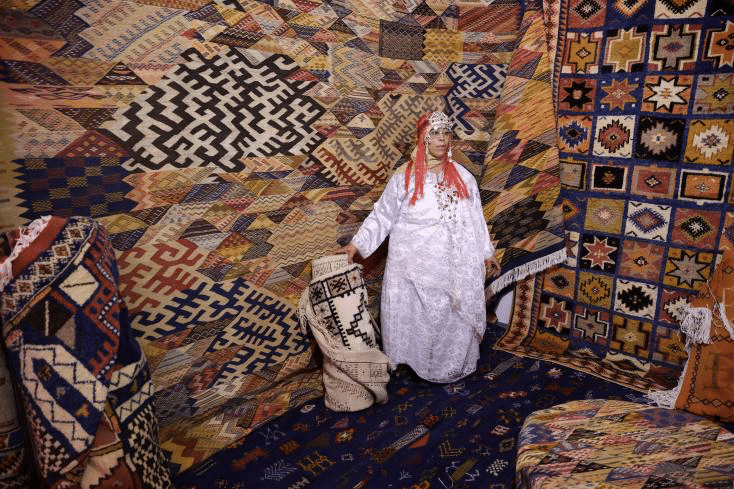
In towns like Taznakht, women’s cooperatives bring weavers together to produce and sell rugs directly, with fair pay and recognition. One regional center there brings together about 35 cooperatives and roughly 3,500 women, and a yearly carpet festival celebrates the craft. Visiting a cooperative lets you watch weaving, learn about the symbols and buy straight from the makers.
Other Traditional Handicrafts
- Pottery: green-glazed Tamegroute ware in the south, and the blue-and-white pottery of Fes and Taroudant
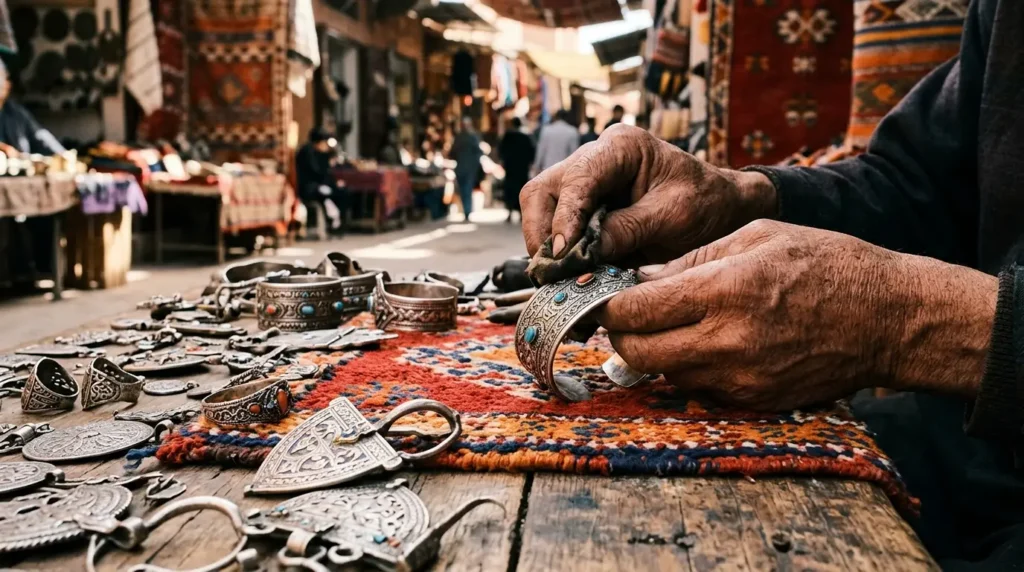
- Silver jewelry: Amazigh silver in Tiznit and the Anti-Atlas, with brooches and amulets
- Palm and basketry: baskets, mats and hats from the Draa oases
- Leather: bags, babouches and cushions from Fes and Marrakech
- Argan oil: produced by women’s cooperatives in the Souss
- Embroidery and weaving: cushions, blankets and clothing
How to Buy an Authentic Rug
Tips
- Ask where and by whom the rug was woven.
- Check the back: handmade rugs show small irregularities.
- Ask about wool and dyes.
- Buy from a cooperative when possible, so the money goes to the weaver.
- Take time, drink tea and negotiate respectfully.
FAQ
How long does it take to weave a rug?
Usually two to four weeks, depending on the size and technique.
What is a Boucherouite rug?
A rug woven from recycled fabric scraps, popular for bright, modern designs.
Where can I see weavers at work?
In cooperatives in Taznakht, Ouarzazate, Azilal, the Middle Atlas and villages near Marrakech.
Call to Action: Visit a women’s weaving cooperative with History Morocco Tours. We include carpet and craft stops in our private tours through Taznakht, Ouarzazate and the Atlas.