Largest Desert in the World, Discover largest desert,What is the largest desert in the world? The answer may surprise you: Antarctica. Despite its icy landscape, Antarctica is officially the world’s largest desert. A desert is defined not by heat or sand, but by extremely low precipitation. Antarctica receives less rainfall and snowfall each year than many hot deserts, including the Sahara. This frozen continent challenges common misconceptions and proves that deserts can be cold, vast, and covered in ice rather than sand.
Why Antarctica is Classified as a Desert
A desert is defined as a region that receives very little precipitation, typically less than 250 millimeters (10 inches) per year. Antarctica receives, on average, only about 50 mm (2 inches) of precipitation (as snow) annually in its interior, qualifying it as a polar desert.
- Size: Approximately 14.2 million square kilometers (5.5 million square miles).
- Type: Polar desert (Cold Desert).
- Key Fact: It holds about 70% of the world’s fresh water, but in frozen form, making it simultaneously the driest and the most water-rich continent.
The Iconic Sahara and Its Moroccan Gateways
Sahara Desert is the world’s largest hot desert (and third-largest overall). Within its vast expanse, different regions offer unique experiences. In Morocco, two famous dune systems serve as spectacular gateways to the Sahara:
Merzouga (Erg Chebbi)
- Location: Eastern Morocco, near the Algerian border.
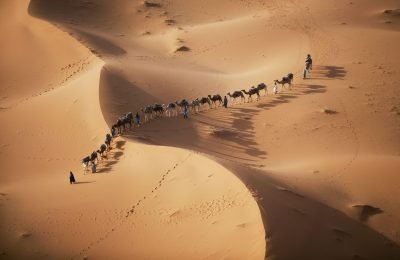
- Characteristics: Features towering, golden-orange sand dunes (an erg) that can reach up to 150 meters (490 feet) in height. It is the most accessible and popular Sahara destination in Morocco, known for its picture-perfect dunes and luxurious desert camps.
- Experience: Offers classic activities like camel treks, 4×4 excursions, and nights in Berber camps under incredibly starry skies.
- Merzouga Sahara Desert Tour 4 Days
Chegaga (Erg Chigaga)
- Location: A more remote region southwest of Ouarzazate, accessible via a long desert piste (off-road track).
- Characteristics: This is Morocco‘s largest dune formation, with some dunes soaring over 300 meters (985 feet). It is far more isolated and untouched than Merzouga, offering a profound sense of solitude and wilderness.
- Experience: The journey is part of the adventure. It provides a more authentic and rugged desert experience, with fewer visitors and vast, silent landscapes.
Sahara Size: Approximately 9.2 million square kilometers (3.5 million square miles).
The Top Deserts of the World: A Quick List
Here’s a look at the world’s largest deserts, showcasing the diversity of these arid landscapes:
| Desert Name | Type | Size | Notes |
|---|---|---|---|
| Antarctic Desert | Polar | 14.2 million km² | Largest Overall |
| Arctic Desert | Polar | 13.9 million km² | – |
| Sahara Desert | Subtropical/Hot | 9.2 million km² | Home to Merzouga & Chegaga |
| Great Australian Desert | Subtropical/Hot | 2.7 million km² | – |
| Arabian Desert | Subtropical/Hot | 2.3 million km² | – |
Key Takeaway
While the Sahara is the iconic “king” of hot deserts, the title of largest desert overall belongs to Antarctica. For travelers, the Sahara’s magic is accessible through stunning dunescapes like Merzouga for classic beauty and convenience, and Chegaga for remote, awe-inspiring adventure. It’s a perfect reminder that deserts, from the frozen to the fiery, are landscapes of extreme and breathtaking beauty.