Kasbahs of Morocco: UNESCO Ait Benhaddou, Amridil, Taourirt, Telouet, Tamnougalt and the Oldest Fortresses of the High Atlas
Morocco’s Kasbahs: A Journey Through Earth, Power and Caravan History
Kasbahs of Morocco , Go Southern Morocco is dotted with castles made of earth. Golden and red towers rise from palm groves, hilltops and river valleys, and each one tells a story of tribes, caravans, sultans and powerful families. This guide covers the most important kasbahs between Marrakech, Ouarzazate, the Draa Valley, Zagora and Taroudant.
What Is a Kasbah? Kasbah vs Ksar
A kasbah (tighremt in Tamazight) is a fortified residence, usually with corner towers, built for a chief, a caid or a prominent family. A ksar (plural ksour) is a whole fortified village. Ait Benhaddou, for example, is technically a ksar, while Telouet and Taourirt are kasbahs. Most are built from rammed earth (pisé) and mud brick, which is why they blend so well with the landscape.
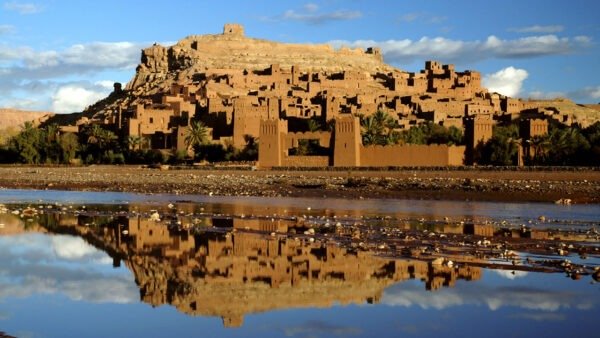
Table of Contents
- What Is a Kasbah? Kasbah vs Ksar
- The Road of 1,000 Kasbahs and Its History
- Ait Benhaddou: The UNESCO World Heritage Ksar
- Taourirt Kasbah, Ouarzazate
- Kasbah Amridil, Skoura Palm Grove
- Telouet Kasbah: The Glaoui Palace in the High Atlas
- Tamnougalt Kasbah, Draa Valley
- Zagora, Taroudant and the Deeper High Atlas
- Kasbahs at a Glance
- Best Kasbah Tours and Itineraries
- Visiting Tips
- FAQ’s
How They Were Built
Clay, straw and water, with palm wood for ceilings and geometric patterns carved into the upper walls. Thick walls keep rooms cool in summer and warm in winter.
The Road of 1,000 Kasbahs and Its History
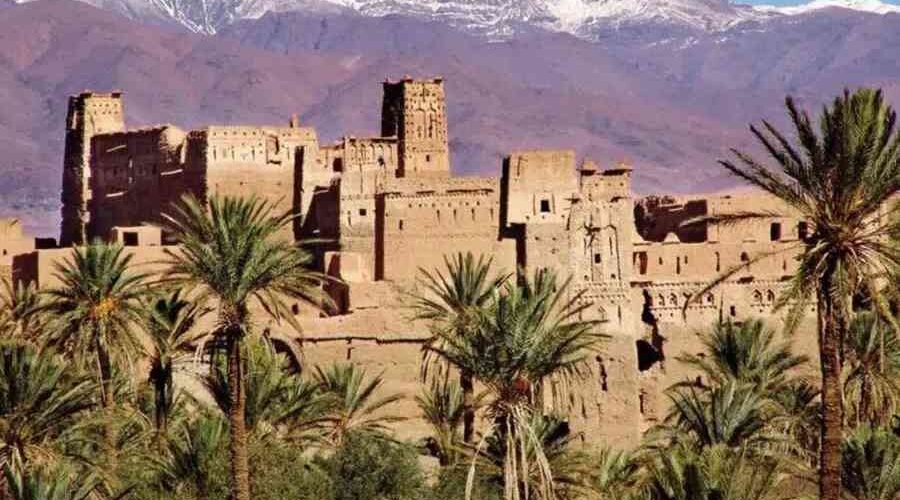
For centuries, caravans carried salt, gold, dates and goods between the Sahara and Marrakech. Kasbahs rose along that route to protect trade, store grain and house local rulers. Power in the south shifted between tribes, the Saadian dynasty in the 16th century, and later the Glaoui family, who dominated much of the High Atlas until 1956.
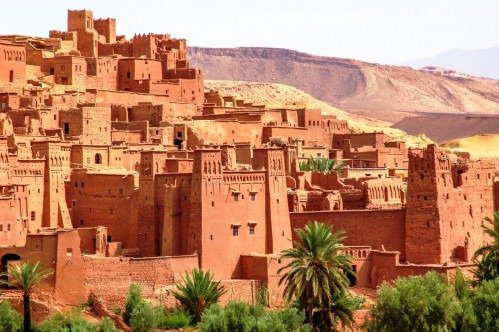
Ait Benhaddou: The UNESCO World Heritage Ksar
Ait Benhaddou sits on the former caravan route between the Sahara and Marrakech. It was inscribed on the UNESCO World Heritage List in 1987 for its outstanding earthen architecture. It is the one site in this guide that carries that listing.
Why It Matters
- A fortified village of kasbahs, houses, granaries and a hilltop agadir
- Considered one of the best preserved examples of a pre-Saharan ksar
- Famous as a film location, which has helped fund its restoration
- Only a few families still live inside today
Tip
Visit early or at sunset for soft light, and take a local guide to understand the architecture and its legends.
Taourirt Kasbah, Ouarzazate
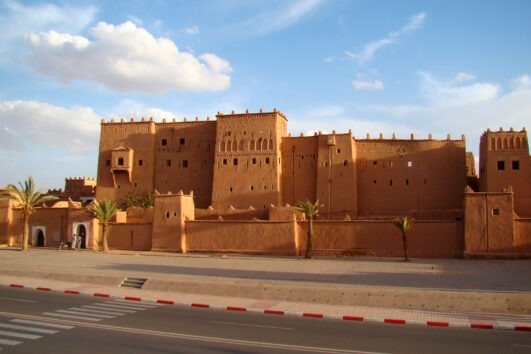
In the center of Ouarzazate stands Taourirt, a maze of nearly 300 rooms. Oral tradition says the Imzwarn family first built it in the 17th century, and the Glaoui family expanded it in the 19th century. Inside you find courtyards, decorated ceilings, former reception rooms and quarters for servants and guests.
What to Look For
Painted cedar ceilings, carved plaster and the upper terraces with views over the oasis.
Kasbah Amridil, Skoura Palm Grove
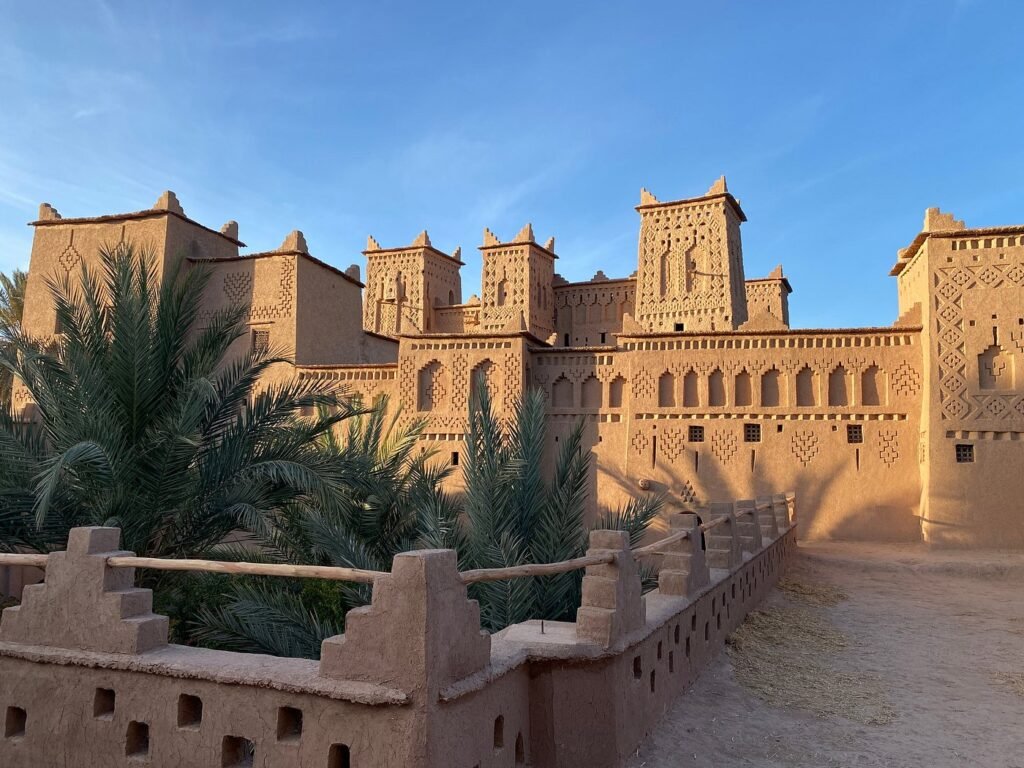
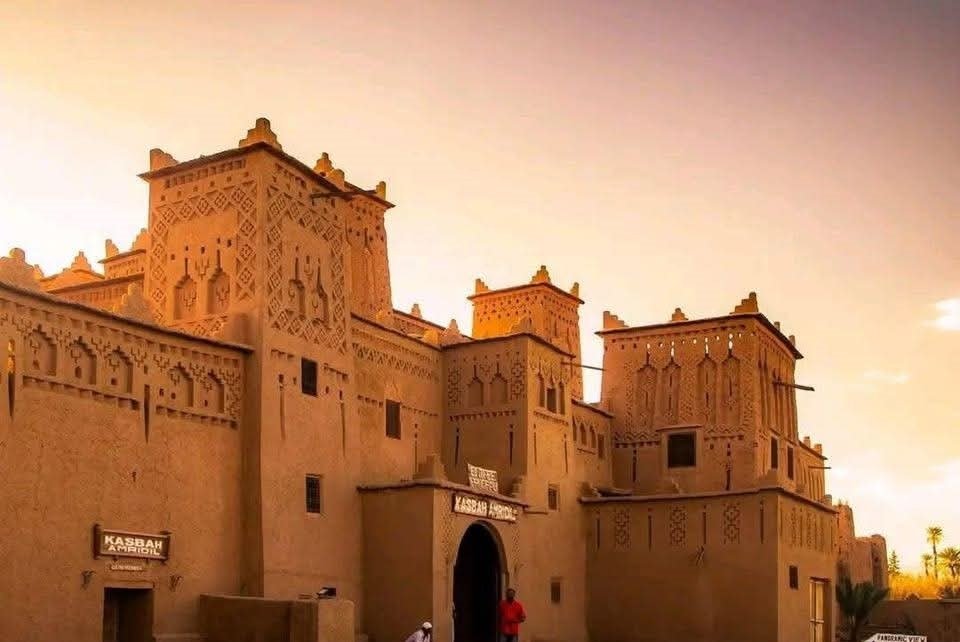
About 40 km from Ouarzazate, Kasbah Amridil rises at the edge of the Skoura palmeraie. It dates to the 17th century and was founded by the Nassiri family, whose descendants still own and maintain it. It once appeared on Morocco’s 50 dirham note.
Highlights
- Corner towers, courtyards and a small museum of Amazigh daily life
- Rooftop views over the palm grove and the High Atlas
- Nearby Skoura kasbahs, such as Ait Abou, with their vertical, multi-family design
Telouet Kasbah: The Glaoui Palace in the High Atlas
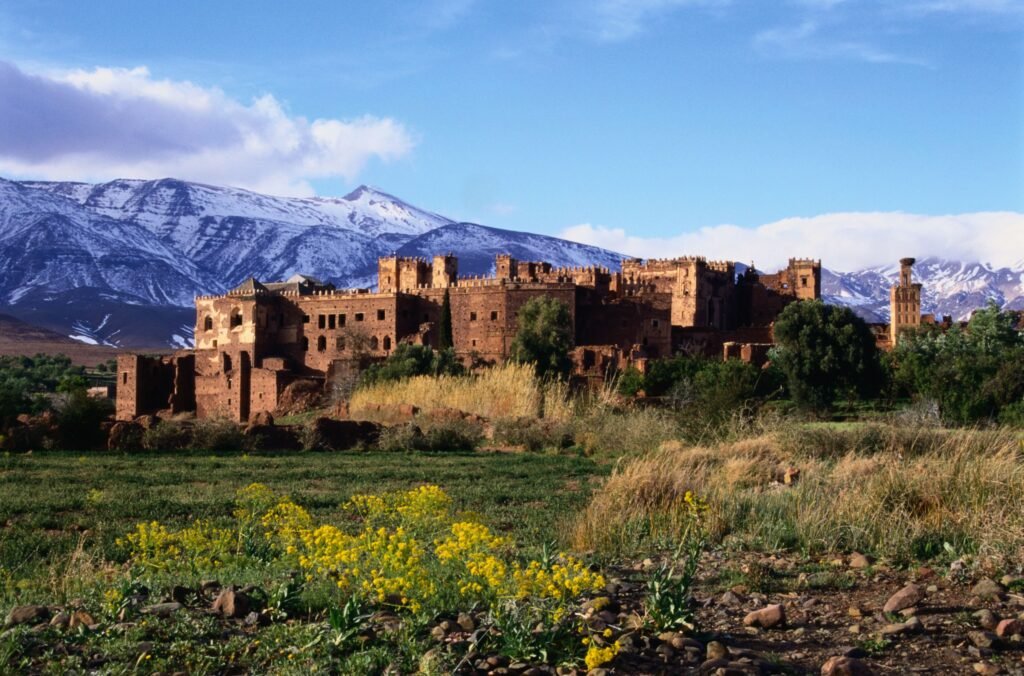
Off the Tizi n’Tichka road, Telouet was the stronghold of the Glaoui family, who controlled the pass and its caravan taxes. Thami El Glaoui ruled as Pasha of Marrakech from 1912 to 1956. Parts of the kasbah are crumbling, yet the interior still shows zellige tilework, carved plaster and painted cedar ceilings.
Why Visit
It is quieter than Ait Benhaddou and shows the political side of kasbah history: wealth, influence and a dramatic fall after independence.
Tamnougalt Kasbah, Draa Valley
South of Ouarzazate, near Agdz, Tamnougalt overlooks the Draa River. The name means “meeting point” in Tamazight, and the ksar was a gathering place for caravans. It dates from around the 16th century, and the Kasbah des Caids was built by leaders of the Mezguita tribe.
Highlights
- Maze of passages, courtyards and rooftop terraces
- Palm groves below and mountain backdrop above
- Guesthouse stays inside traditional rooms
Zagora, Taroudant and the Deeper High Atlas
Zagora and the Lower Draa
Along the Draa Valley, between Agdz, Zagora and M’Hamid, dozens of ksour and kasbahs line the river. In Amzrou near Zagora, the old kasbah includes a former mellah and a rich silversmith heritage.
Taroudant
Known as the “Grandmother of Marrakech,” Taroudant is surrounded by almost 6 km of earth-red ramparts and a cluster of gates. It briefly served as a Saadian base in the 16th century and still has a kasbah quarter.
Deeper High Atlas Villages
Beyond the main roads, mountain villages in the Ounila Valley, Dades, Todra and the southern slopes of Toubkal hold older fortified houses and granaries (agadirs). Exact dates are uncertain, since many were built, rebuilt and repaired over centuries, so the “oldest” claims you hear locally are best treated as tradition.
Kasbahs at a Glance
| Kasbah | Location | Period | Known for |
|---|---|---|---|
| Ait Benhaddou | Near Ouarzazate | Centuries old, UNESCO 1987 | Best-preserved ksar, film location |
| Taourirt | Ouarzazate | 17th to 19th century | Glaoui residence, 300 rooms |
| Amridil | Skoura | 17th century | Nassiri family, 50 dirham note |
| Telouet | Tizi n’Tichka | 19th century | Glaoui palace, tilework |
| Tamnougalt | Near Agdz | 16th century | Caravan meeting point |
| Taroudant | Souss Valley | 16th century walls | Saadian ramparts |
Best Kasbah Tours and Itineraries by Expert History Morocco Tours
From Marrakech: 3 Days
Marrakech, Tizi n’Tichka, Telouet, Ait Benhaddou, Ouarzazate (Taourirt), Skoura (Amridil), return.
From Marrakech: 5 Days
Add the Draa Valley, Tamnougalt, Zagora and Erg Chigaga for a kasbah and desert combination.
From Agadir or Taroudant: 4 Days
Taroudant ramparts, Taliouine, Taznakht, Ouarzazate, Ait Benhaddou and Marrakech.
Private Tours with History Morocco Tours
Expert guides explain the architecture, family stories and caravan history, with comfortable 4×4 or minibus transport and stays in restored kasbah guesthouses.
Visiting Tips
- Spring and autumn have the best weather.
- Wear sturdy shoes, since stairs are steep and uneven.
- Hire a local guide at Telouet, Taourirt and Tamnougalt.
- Avoid midday heat in summer.
FAQ
Which kasbah is UNESCO listed?
Ait Benhaddou, inscribed in 1987.
What is the difference between a kasbah and a ksar?
A kasbah is a fortified residence, and a ksar is a fortified village.
Which kasbah is best for photos?
Ait Benhaddou at sunrise, Amridil from the palm grove and Telouet for interiors.
Discover Morocco’s Kasbahs with a Local Expert
Let History Morocco Tours design your private kasbah route from Marrakech, Casablanca or Agadir. Contact us for a tailored itinerary. for More Infp Enquire