the Traditional Moroccan Food and Cooking: Tajine, Couscous, Tanjia, Bread, Tea and Sardines
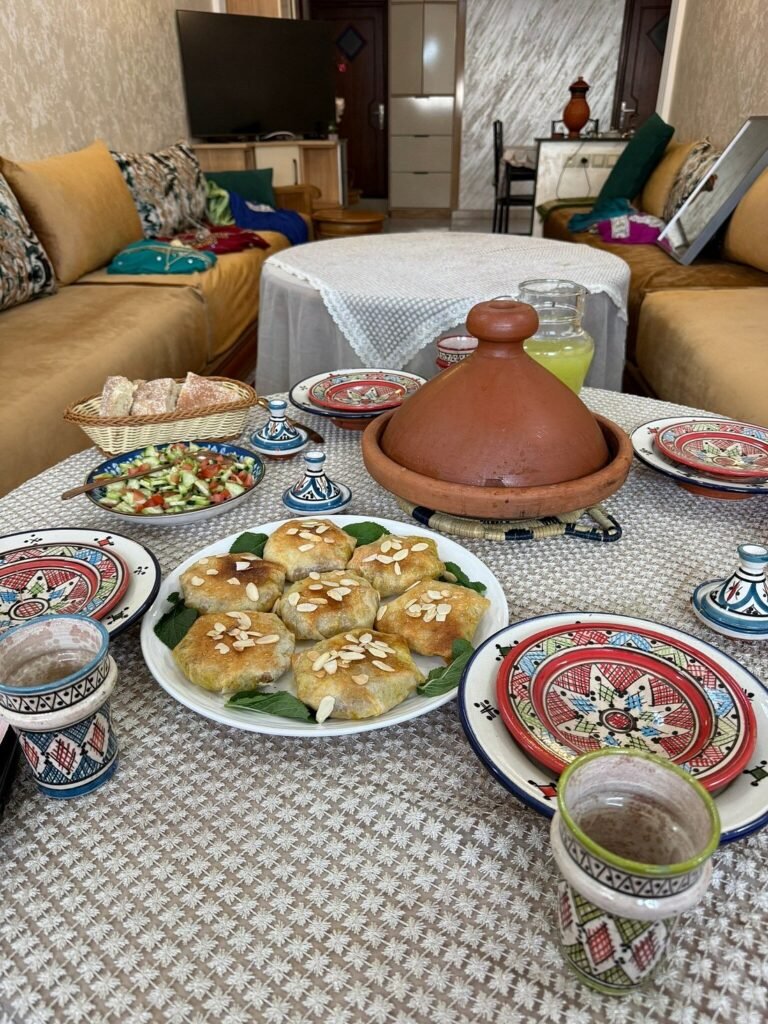
Moroccan cooking is about patience, spices and sharing. Meals are served on a large dish at the center of the table, and everyone eats together, often with bread as the spoon. Here are the dishes and traditions that define the country’s cuisine.
Moroccan Food and Cooking: Tajine, Couscous, Tanjia, Bread, Mint Tea and Sardines
Table of Contents
- The Moroccan Table
- Tajine: Slow Cooking in Clay
- Couscous: The Friday Dish
- Tanjia: The Marrakech Specialty
- Moroccan Bread
- Mint Tea: The Ritual of Welcome
- Sardines from the Atlantic Coast
- Sweets and Street Food
- Cooking Classes and Food Experiences
- FAQs
Guests are served first, and refusing tea or food can feel impolite. A meal usually begins with salads and bread, followed by the main dish, then fruit and tea. Common spices include cumin, ginger, turmeric, paprika, cinnamon and saffron, and preserved lemons, olives and fresh herbs give dishes their character.
Tajine: Slow Cooking in Clay
The word tajine names both the dish and the conical clay pot it is cooked in. The shape lets steam rise and drip back, keeping meat and vegetables tender with little water.
Popular Tajines
- Chicken with preserved lemon and olives
- Beef or lamb with prunes and almonds
- Kefta (meatballs) with eggs and tomato
- Seasonal vegetable tajine, a favorite for vegetarians
Tip
Cook on low heat and let the flavors build slowly.
Couscous: The Friday Dish
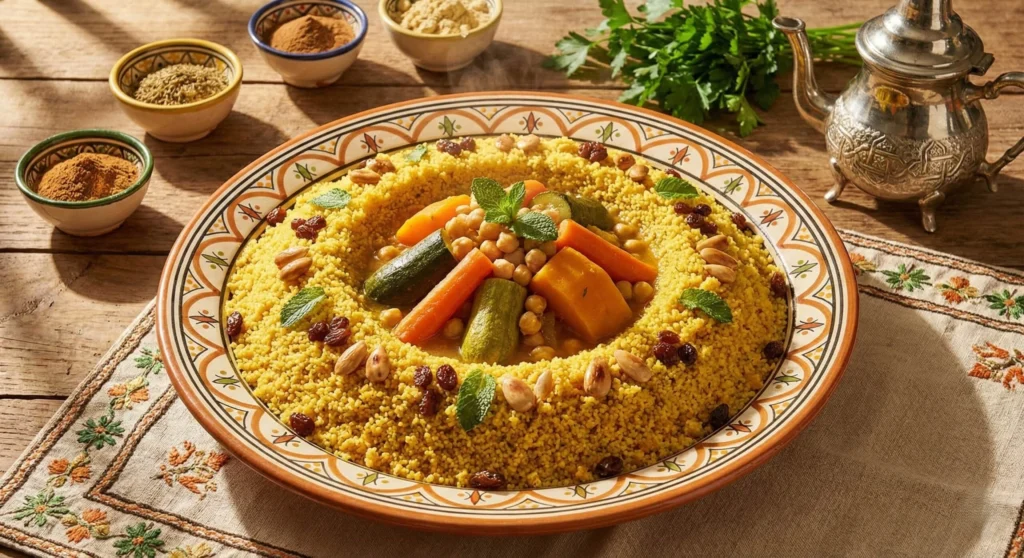
Couscous is steamed semolina, traditionally prepared in a couscoussier and served with vegetables and meat after Friday prayers. Families gather around a large shared dish. Couscous was inscribed in 2020 on UNESCO’s list of intangible cultural heritage, shared by Morocco and several North African countries.
Styles
- Seven-vegetable couscous with chickpeas and a rich broth
- Seffa, a sweet version with cinnamon, sugar and almonds, often served at celebrations
Tanjia: The Marrakech Specialty
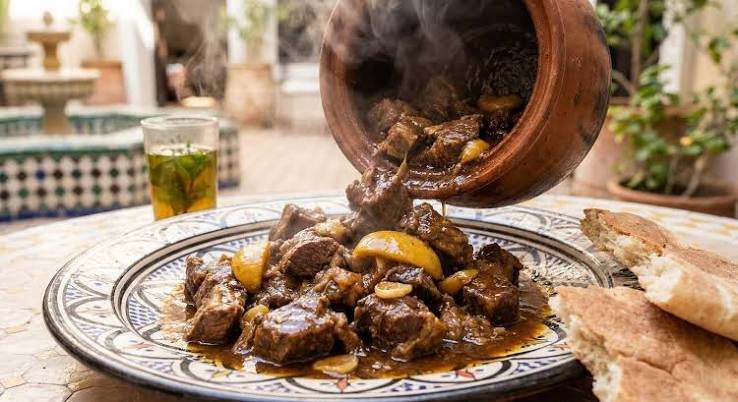
Tanjia is a Marrakech dish, traditionally associated with men and bachelors, and named after the tall clay jar it is cooked in. Beef or lamb is seasoned with preserved lemon, cumin, garlic and saffron, sealed in the jar and slow-cooked in the warm embers of a hammam furnace for hours. The result is soft, rich and aromatic, eaten with fresh bread.
Moroccan Bread
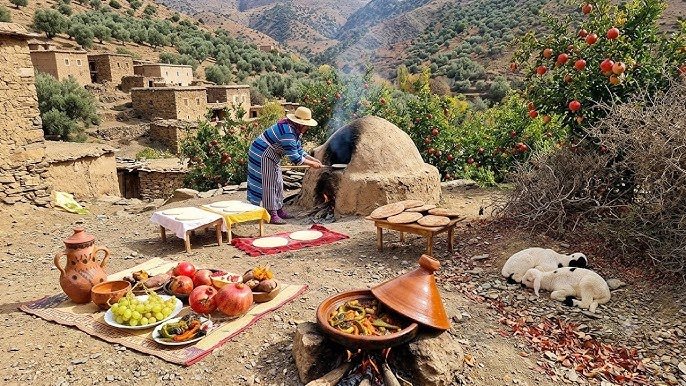
Bread, or khobz, is part of every meal. Round loaves are baked at home or taken to the neighborhood communal oven, a tradition that still survives in many towns and villages.
Other Breads and Pancakes
- Msemen: flaky square flatbread
- Harcha: semolina griddle bread
- Baghrir: the “thousand holes” pancake, served with honey and butter
Mint Tea: The Ritual of Welcome
Moroccan tea is green tea with fresh mint and sugar. It is brewed in a metal teapot and poured from a height to create foam. Serving tea is a sign of welcome, and according to a popular saying, three glasses are offered, each with its own character, from gentle to strong.
Sardines from the Atlantic Coast
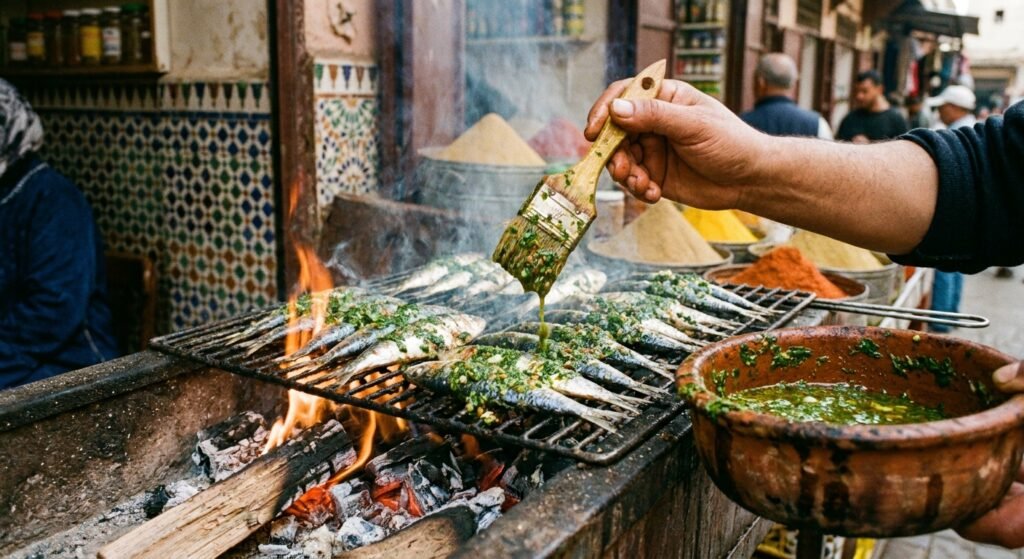
Along the Atlantic coast, in Essaouira, Safi and Agadir, fresh sardines are grilled over charcoal or marinated in chermoula, a mix of garlic, cumin, paprika, parsley, coriander and lemon. You can also try stuffed sardines, sardine tajine and sardine sandwiches at a harbor stall, with a squeeze of lemon and fresh bread. It is simple food at its best.
Sweets and Street Food
- Dates, almonds and honey pastries
- Fresh orange juice in the squares of Marrakech
- Harira soup, especially in Ramadan
- Grilled brochettes and olives from market stalls
Cooking Classes and Food Experiences
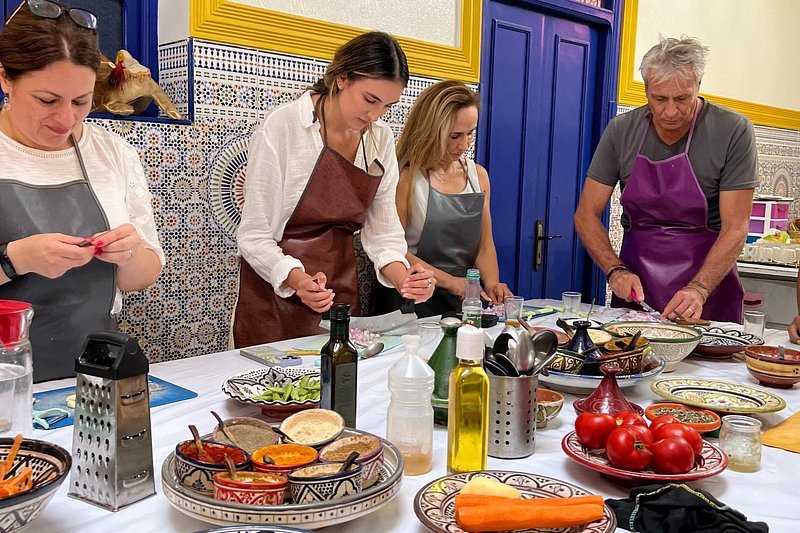
A cooking class in Marrakech, Fes or a mountain village teaches you to choose ingredients at the souk, mix spices and cook a tajine or couscous yourself. History Morocco Tours can include market visits, home meals and cooking lessons with local families in your itinerary.
FAQ
What is the national dish of Morocco?
Couscous and tajine are both considered national dishes.
Is Moroccan food spicy?
Usually it is fragrant and flavorful rather than hot, and chili is added on the side.
Is it easy to eat vegetarian in Morocco?
Yes. Vegetable tajines, couscous, salads and soups are widely available.
Call to Action: Taste real Morocco with History Morocco Tours. Our private journeys include home-cooked meals, market tours, tea with local families and coastal seafood stops. Contact Us