This 8 Day Souss Tiznit Atlantic Legzira Agadir, Private Trip from Marrakech is one of the most distinctive circuits in our portfolio — a journey Souss 8 Day that goes west and south along the Atlantic coast rather than east to the desert, covering landscapes and cities that most international visitors never reach. Beginning in Marrakech, you spend a day in the Agafay rocky desert at the foot of the High Atlas, then sweep north to Casablanca, south along the Atlantic coast through El Jadida and Essaouira, further south to Agadir and the silver–craft city of Tiznit, and then to one of Morocco’s most beautiful and least-visited wild beaches at Elgzira before exploring the ancient walled city of Taroudant in the Souss Valley — returning to Marrakech through the mountain passes of the High Atlas.
Perfect Chose This tour of 8 Day is ideal for travelers, Couple, Seniors and Family, who have already visited the Sahara and the imperial cities, for those who want Morocco’s Atlantic face rather than its desert interior, and for anyone seeking a genuinely off-the-standard-circuit experience along one of the world’s great coastal roads. Every night you are in a different world — city, desert plateau, Atlantic port, windswept coast, Berber silver town, ancient walled oasis city — and you begin and end in Marrakech.
Route of this Adventure 8 day: Marrakech → Agafay Desert & Atlas Mountains → Casablanca → El Jadida → Essaouira → Agadir → Tiznit → Elgzira Beach → Taroudant → Marrakech
Trip Duration: 8 Days / 7 Nights- Starts: Marrakech (hotel or airport) Ends: Marrakech (hotel or airport) Type: Private Guided Tour
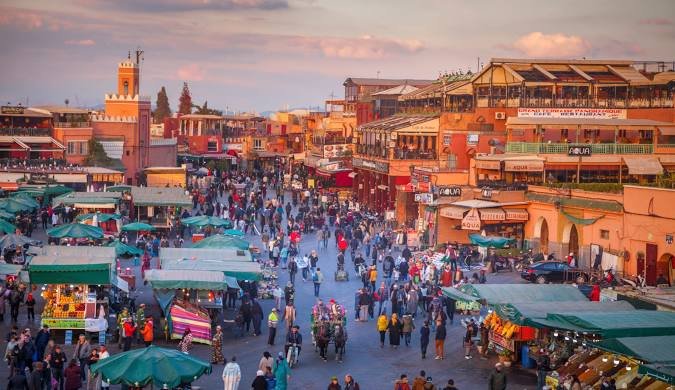
Arrive in Marrakech at your hotel or riad in the medina. Depending on your arrival time, begin with a guided walk through the heart of the city. The Djemaa el-Fna — a UNESCO Intangible Cultural Heritage site — is best experienced at dusk when the square transforms from afternoon market to nocturnal spectacle of food stalls, musicians, storytellers, and fire. Morning arrivals can add a visit to the Bahia Palace — a 19th-century vizier’s palace of 160 rooms with hand-painted cedarwood ceilings and garden courtyards — and the Saadian Tombs — the 16th-century royal mausoleum sealed for two centuries and rediscovered in 1917 with Italian Carrara marble and extraordinary carved stucco. Evening dinner in the medina.
Overnight: Marrakech medina riad or hotel
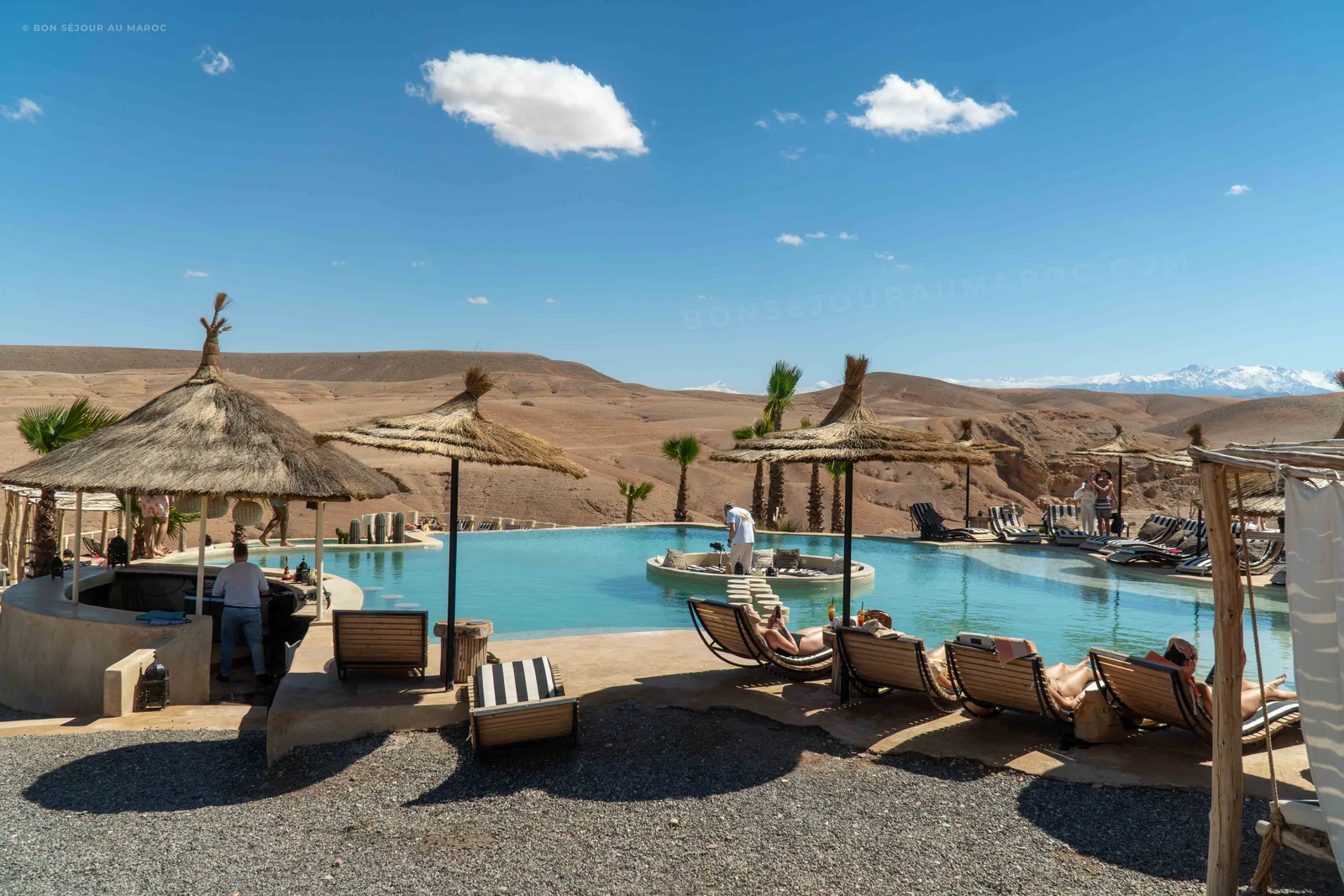
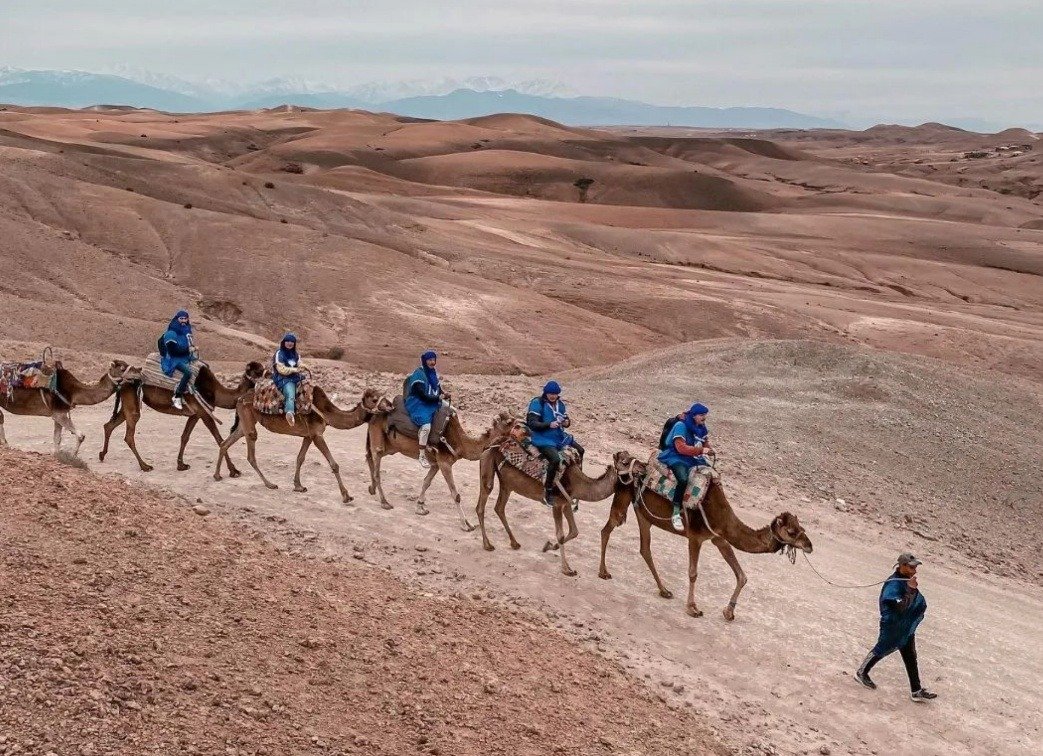
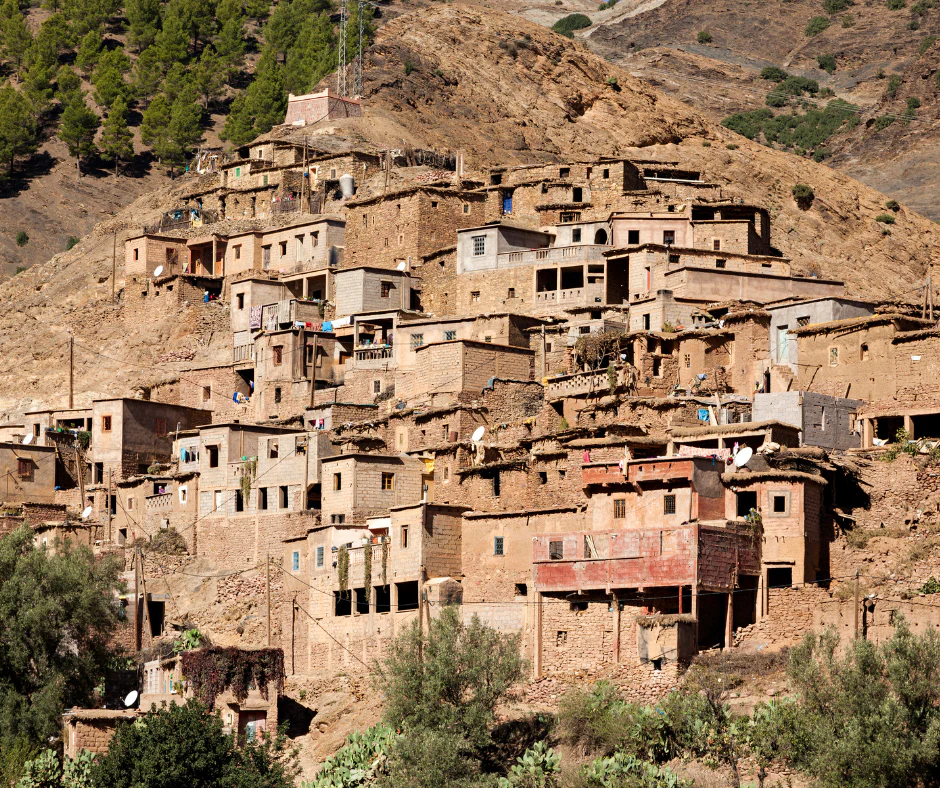
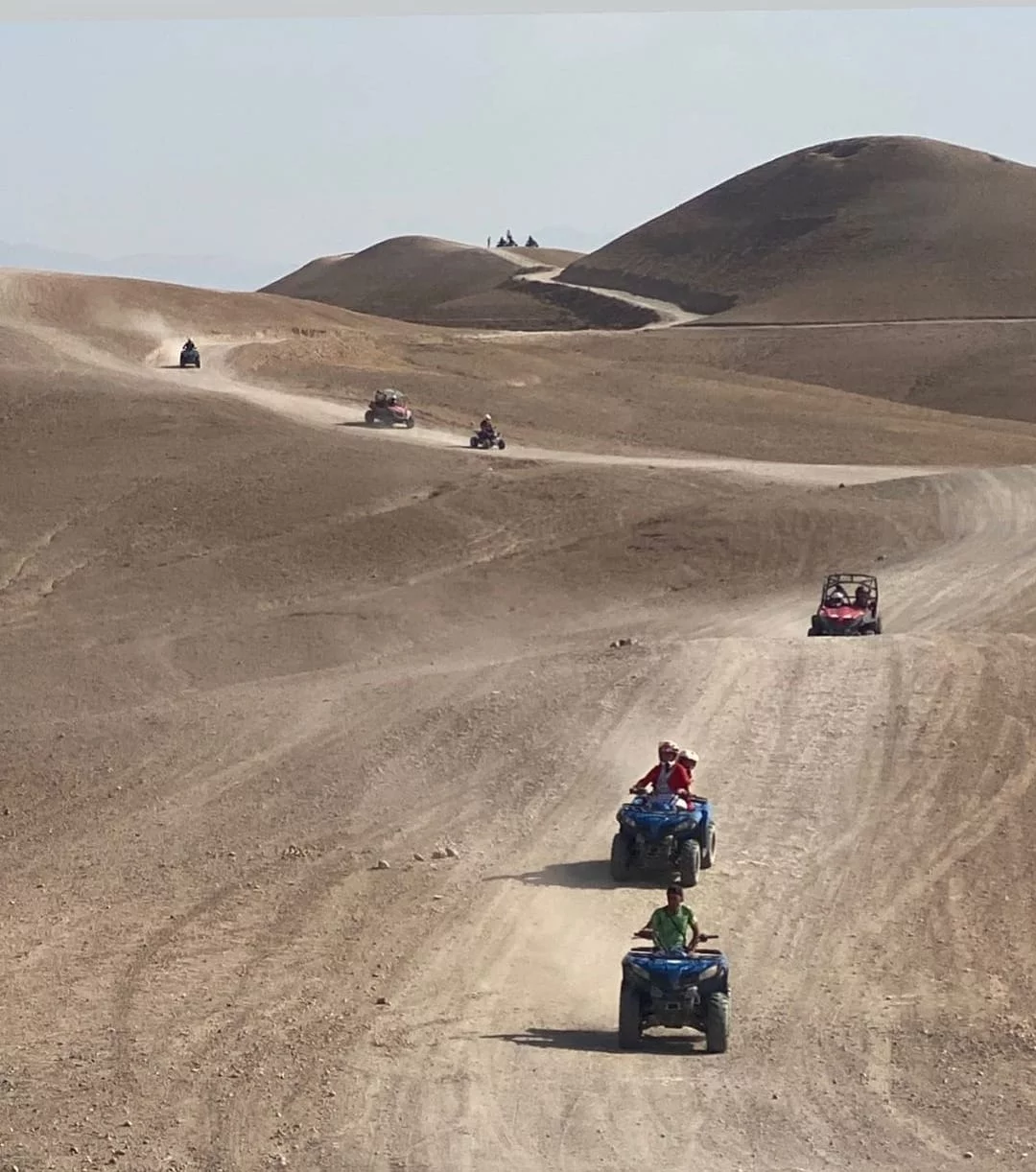
A full day in the landscapes immediately surrounding Marrakech — extraordinary for how different they are from the city. Drive 40 minutes southwest to the Agafay Desert — a vast rocky plateau of grey and ochre stone, ancient dry riverbeds, and Berber villages scattered across a landscape that feels like the Sahara but sits at the foot of the High Atlas Mountains. The Agafay is not a sand desert — it is a mineral desert, ancient seabed lifted by tectonic force into a plateau of extraordinary textures and silence, with panoramic views of the entire High Atlas range from Jebel Toubkal (4,167m) across the western massif. Morning camel ride or quad bike excursion across the plateau. Visit a traditional Berber village in the Agafay. Lunch at a luxury desert camp lodge — the most dramatic lunch setting near Marrakech, with the Atlas filling the horizon. Afternoon visit to the Lalla Takerkoust lake — a turquoise reservoir created by a French-built dam in the 1930s, its blue water a startling contrast to the dry plateau above. Return to Marrakech in the late afternoon.
Overnight: Marrakech medina riad or hotel
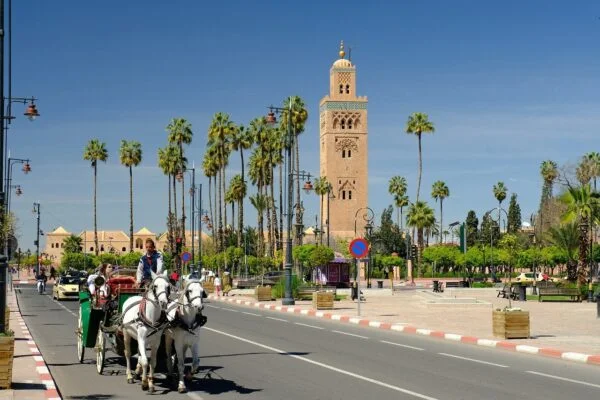
Morning departure north on the motorway to Casablanca — Morocco’s economic capital and largest city, a place that wears its 20th-century history in its architecture more visibly than anywhere else in the country. Full afternoon guided tour: the Hassan II Mosque — built on a promontory over the Atlantic Ocean, one of the largest mosques in the world with a minaret of 210 meters, the tallest religious structure in Africa, its guided interior of hand-carved cedarwood ceilings, hand-laid zellij tile floors, and a retractable roof opening to the Atlantic sky; the Art Deco and Mauresque architecture of the old downtown — the French Protectorate-era buildings (1912–1956) that blend Moroccan Islamic geometric motifs with European Modernist form in a style unique in the world; and the Corniche — Casablanca’s long Atlantic seafront promenade. Evening dinner at Rick’s Café — the legendary piano bar recreated from the 1942 Humphrey Bogart film, with live pianist, original film memorabilia, and excellent Moroccan cuisine.
Overnight: Casablanca city hotel
Morning departure south along the Atlantic coast road — one of the most beautiful drives in Morocco. First stop: El Jadida — a city of extraordinary layered history. The Portuguese built their fortified city of Mazagan here in 1502 and what remains within its 16th-century bastions is a UNESCO World Heritage Site. The centerpiece is the Portuguese Cistern — a vaulted underground cistern of 1514, its Gothic columns reflected in the shallow water on the floor in an image of haunting architectural beauty that Orson Welles used as a filming location for his 1952 Othello. Walk the Portuguese ramparts above the Atlantic and the cobblestone lanes of the fortified city. Lunch in El Jadida. Continue south through the green Doukkala plains and the argan tree forest to Essaouira. Arrive in the late afternoon. First walk on the sea ramparts as the sun descends toward the Atlantic. Dinner at the port grill stalls — the freshest grilled fish in Morocco, eaten at open tables beside the fishing boats.
Overnight: Essaouira medina riad
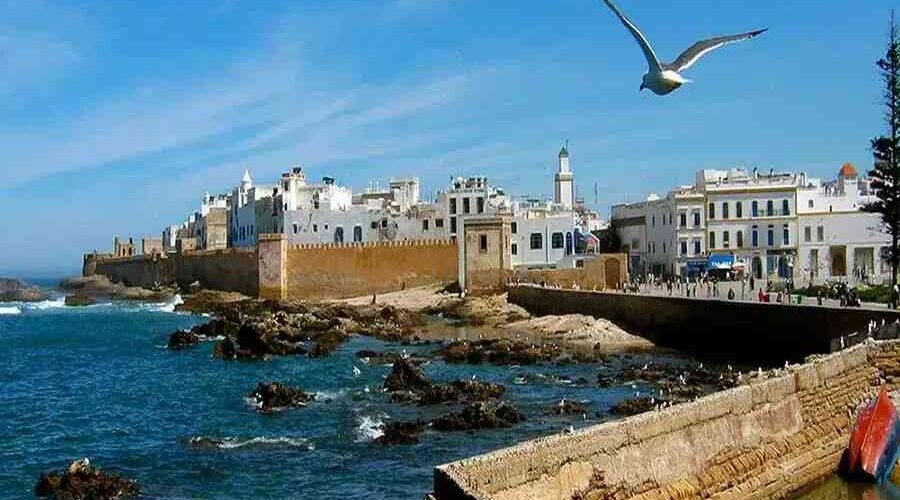
A complete free day in Essaouira — one of the most distinctive and culturally layered cities in Morocco, its 3,000-year history running from Phoenician trading post through Roman port, Portuguese fortress, 18th-century imperial commercial capital, Jimi Hendrix’s 1969 retreat, and contemporary art and Gnawa music hub. Morning guided walk: the sea ramparts and Skala de la Ville — the 18th-century coastal battery with original bronze cannons pointing across the Atlantic; the blue-painted fishing port — a working harbor where wooden boats have gone out before dawn for centuries; the medina souks — the thuya woodworking ateliers where craftsmen carve the fragrant burl wood into furniture and decorative objects using techniques unchanged for generations; and the art galleries of the medina, many showing Gnawa-influenced contemporary painting. Lunch of fresh grilled fish and seafood at the port grill stalls. Afternoon free: walk the wide Atlantic beach, visit a Gnawa music session — Essaouira is the undisputed capital of Gnawa music in Morocco, this ancient Sub-Saharan spiritual trance tradition now recognized as UNESCO Intangible Cultural Heritage — or browse the galleries and argan oil cooperatives of the medina.
Overnight: Essaouira medina riad
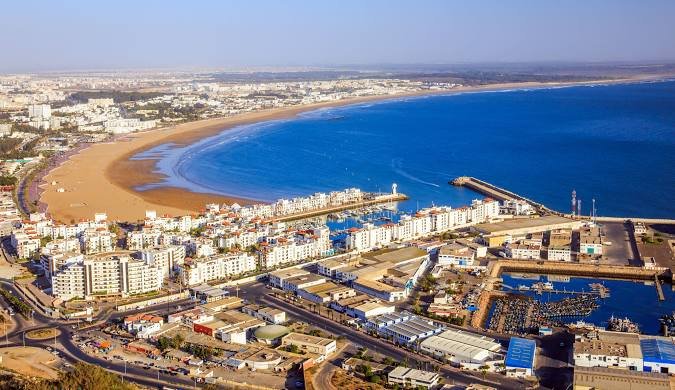
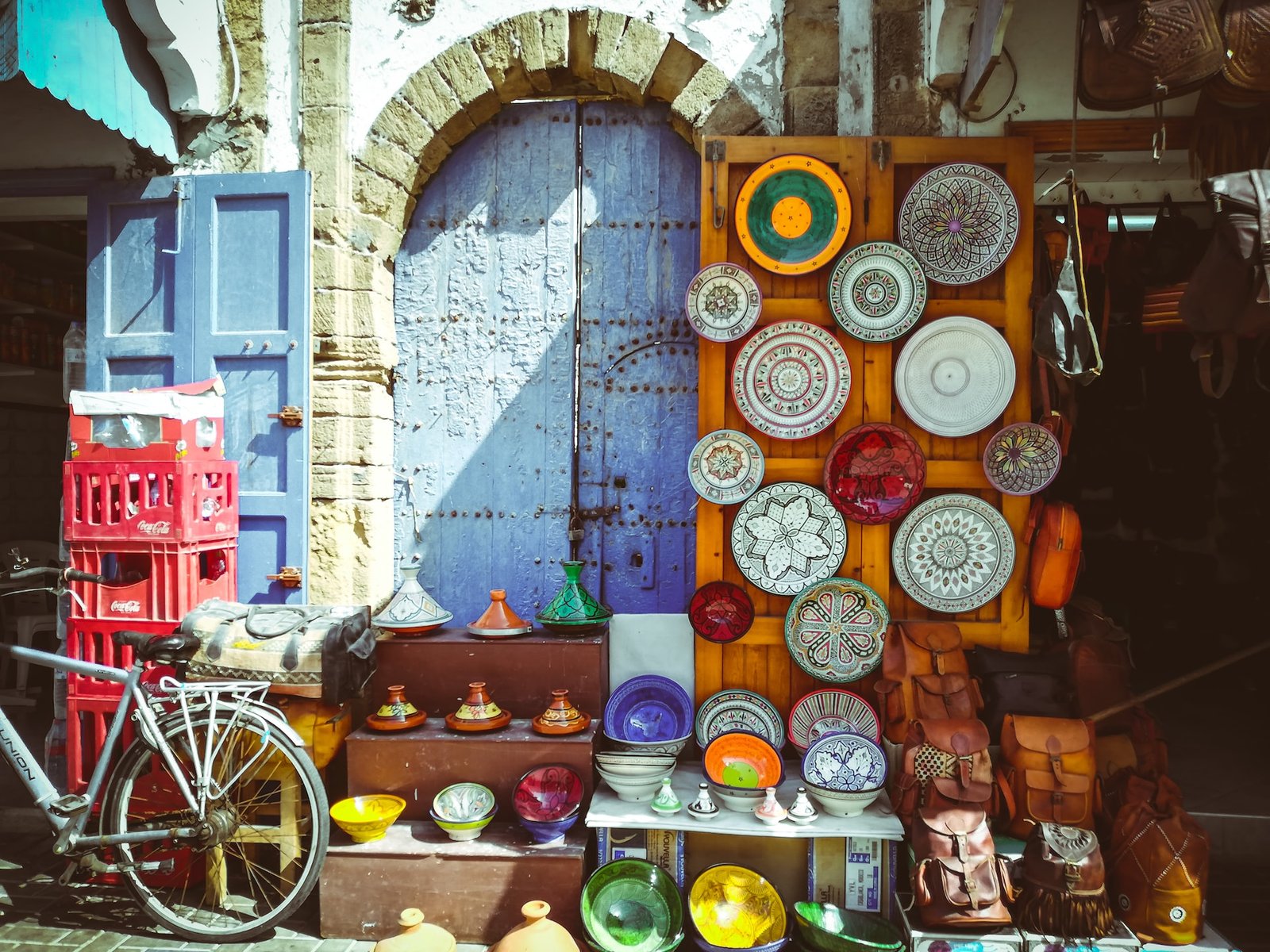
Morning departure south from Essaouira along the Atlantic coast. Drive through the argan tree forest — the ancient Arganeraie UNESCO Biosphere Reserve, a landscape of ancient gnarled argan trees unique to southwestern Morocco. Stop at an argan oil cooperative to watch the traditional pressing process and taste the oil — pressed by hand using stone mills inherited from their grandmothers by Berber women’s cooperatives. Continue south to Agadir. The city was almost entirely destroyed by an earthquake in 1960 and rebuilt as Morocco’s first modern resort city — its old Kasbah hill still bears the Arabic inscription “God, Country, King” carved into the ruins above the bay. Drive up to the Agadir Oufella Kasbah ruins for the panoramic view over the bay, the city, and the Atlantic — one of the finest coastal viewpoints in Morocco. Lunch in Agadir at a seafront restaurant on the bay. Continue south to Tiznit — the ancient walled market city at the edge of the Anti-Atlas, famous throughout Morocco and beyond for its silver jewelry craftsmanship. Tiznit’s silversmiths have produced the most refined Amazigh (Berber) jewelry in Morocco for centuries — fibulas, anklets, headdresses, and amulets in styles that document the cultural history of the entire Souss-Saharan region. Walk the Tiznit ramparts, the souk des bijoutiers (the silversmiths’ market), and the Grande Mosquée with its unusual wooden minaret. Check into your Tiznit hotel.
Overnight: Tiznit hotel or riad
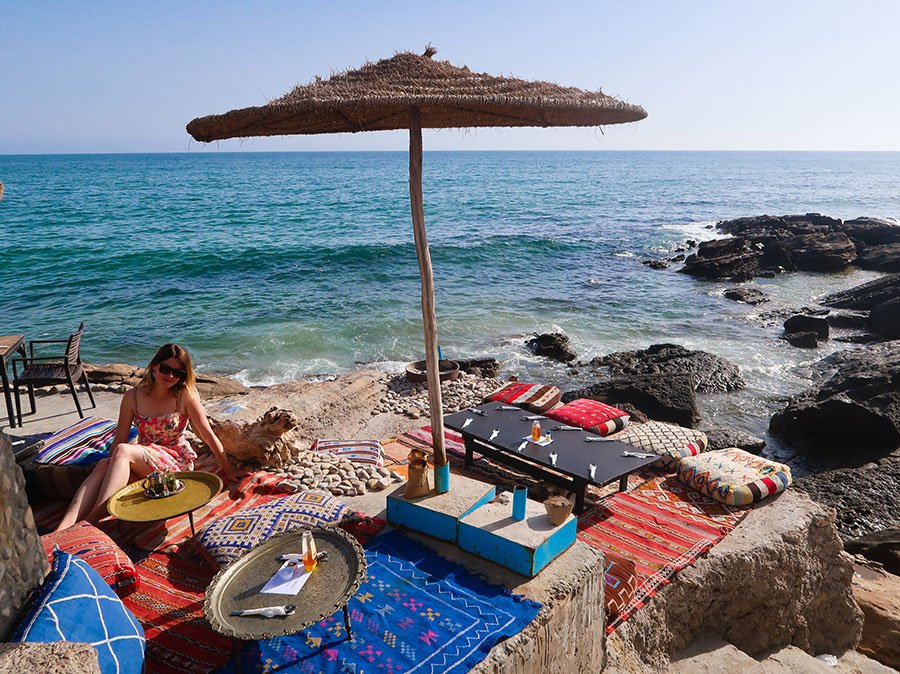
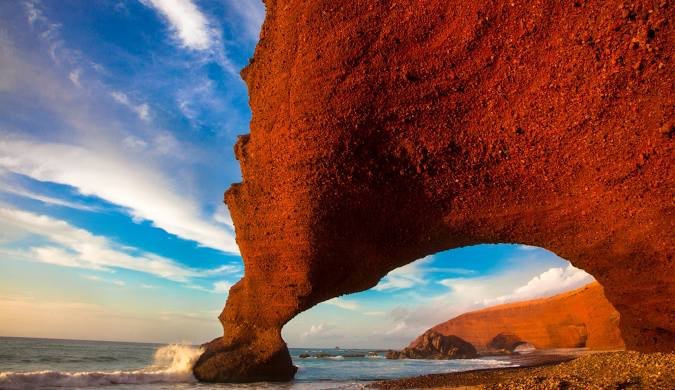
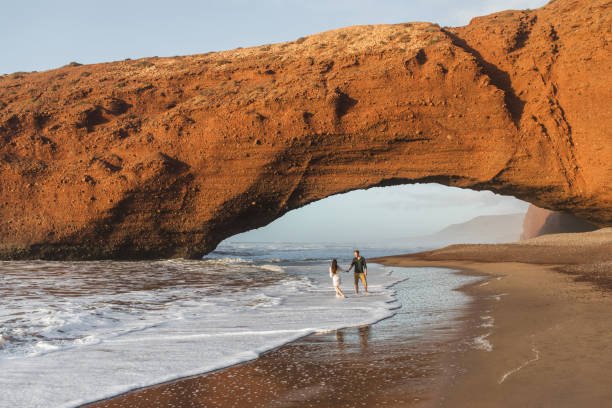
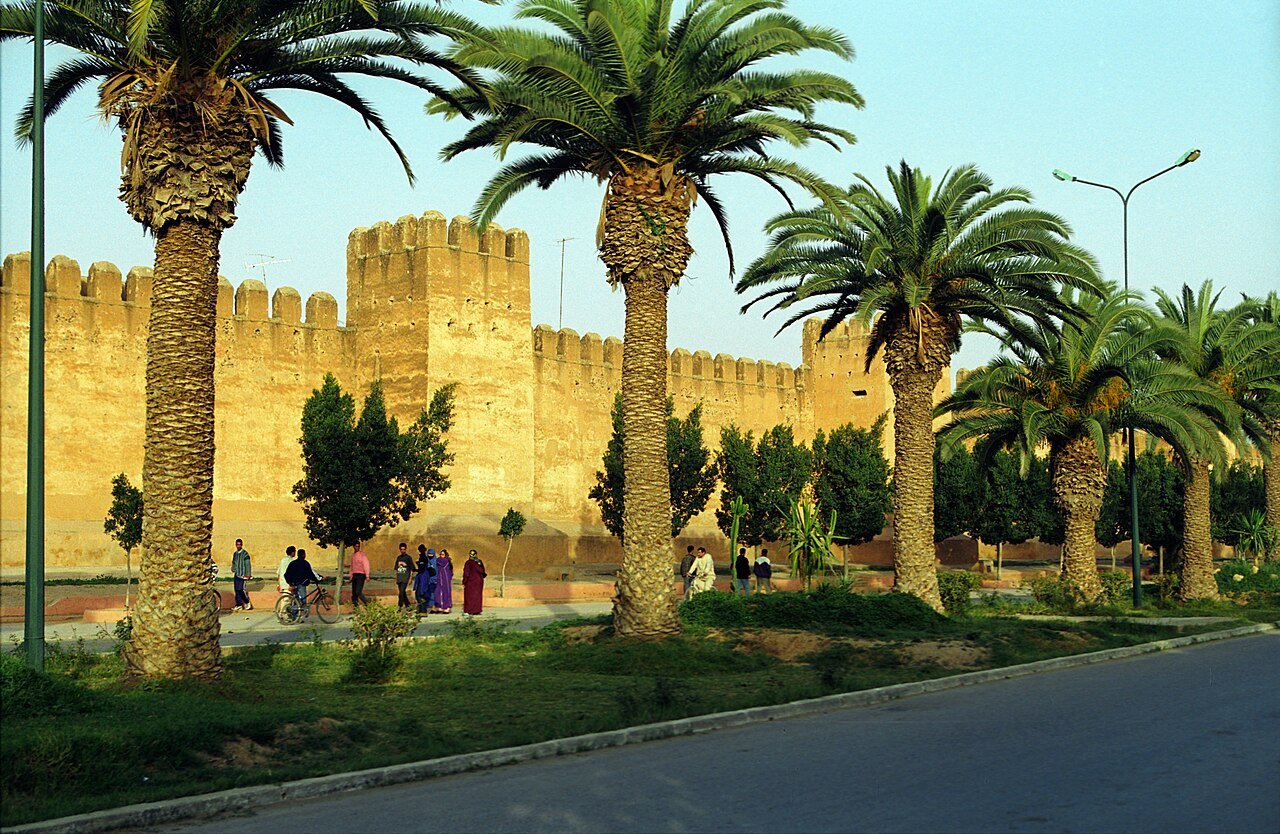
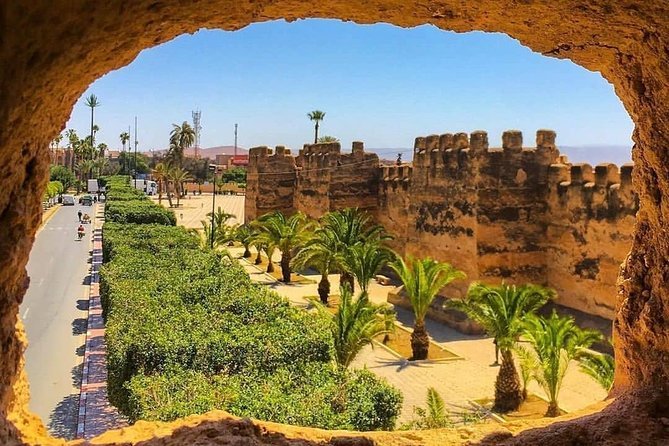
A day of two completely contrasting experiences — one of Morocco’s most beautiful wild beaches and one of its finest walled cities. Morning drive southwest from Tiznit to the Atlantic coast and Elgzira Beach — one of the most extraordinary and least-visited beaches in Morocco. Elgzira means “the island” in Moroccan Arabic — at low tide a natural sandbar connects the beach to a small rocky island offshore, creating a tidal lagoon of extraordinary beauty. The beach stretches in an arc of pale sand between rocky headlands, the Atlantic surf rolling in from the open ocean, with almost no development and very few visitors. This is Morocco’s wild Atlantic coast at its most dramatic and most unspoiled. Morning at leisure on the beach — swim, walk the shore, watch the waves. After lunch at a simple local restaurant near the beach, drive northeast through the Anti-Atlas foothills to Taroudant — the ancient walled capital of the Souss Valley, its 16th-century earthen ramparts still intact for 7 kilometers around the entire city. Taroudant is called “Little Marrakech” for its similar red-earthen architecture and souks but with a fraction of the tourists. Afternoon guided walk through Taroudant’s two souks — the Arab souk and the Berber souk, two distinct market cultures within one city, selling traditional Souss crafts, argan products, local silver, and Taroudant pottery. Walk the ramparts at golden hour. Dinner in Taroudant.
Overnight: Taroudant riad or kasbah hotel
After breakfast, departure north from Taroudant toward Marrakech. Two route options through the High Atlas:
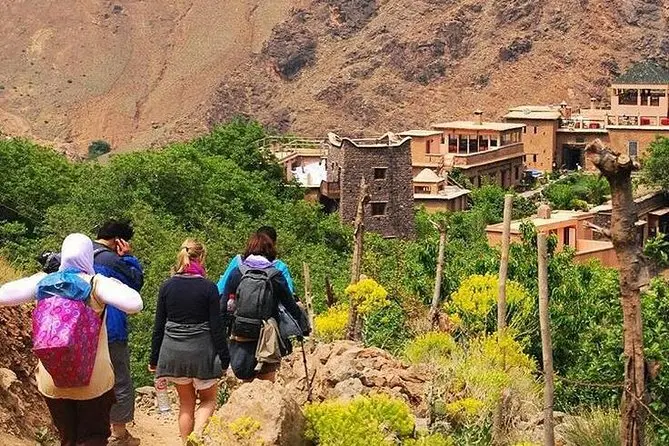
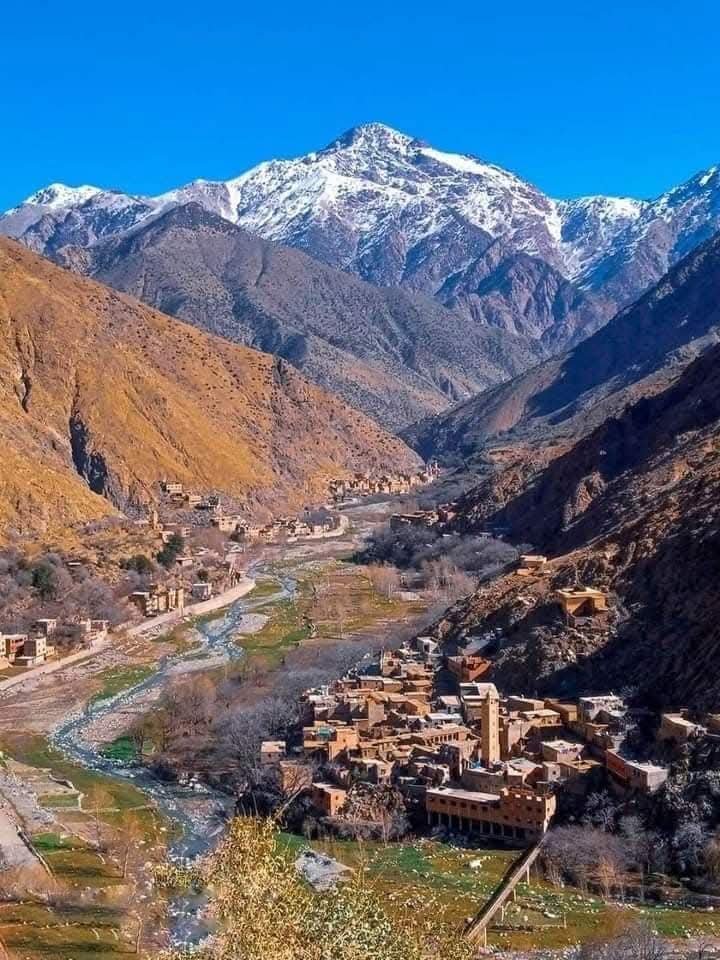
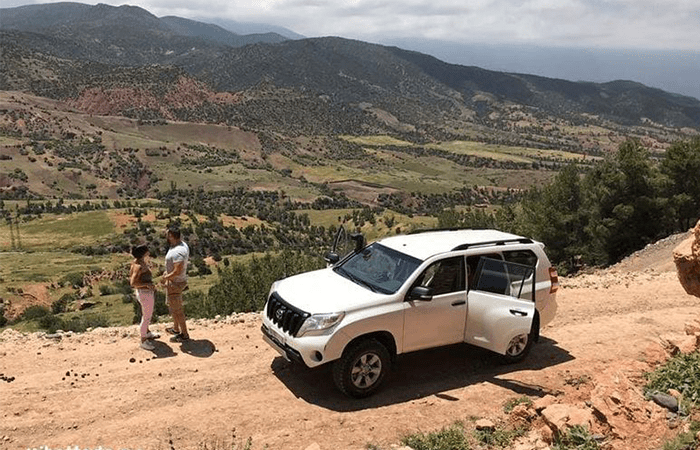
Option A — Tizi n’Test Pass (2,092m): the most dramatic and least-traveled route, ascending through the Souss Valley into the High Atlas on the oldest trans-Atlas road in Morocco. Stop at the Tin Mal Mosque — built in 1153 by the Almohad dynasty at the birthplace of their empire, one of the most historically significant mosques in Moroccan history and one of the only mosques in the country that non-Muslim visitors may enter, now standing in magnificent ruin in a remote mountain valley. The road offers hairpin bends above a 1,000m drop to the Souss plain below with the entire arc of the valley visible from the summit. Arrive in Marrakech via the western Atlas in the early afternoon.
Option B — Tizi n’Tichka Pass (2,260m): the more direct eastern route through the High Atlas, Morocco’s highest paved road, with panoramic views of jagged peaks and Berber villages. Faster and still spectacular.
Arrive in Marrakech in the afternoon. Drop-off at your hotel in the medina, or continue directly to Marrakech Menara Airport for your departure flight. If your flight departs in the evening, there is time for a final walk on the Djemaa el-Fna or a visit to the Majorelle Garden before your transfer. Tour ends.
Tour ends at Marrakech hotel or Marrakech Menara Airport,
What makes this tour different from the standard Morocco circuits?
Most Morocco tours go east from Marrakech — to the Sahara, Fes, and the imperial cities. This tour goes west and south along the Atlantic coast, covering a region most international visitors never see: the wild Atlantic between Essaouira and Agadir, the silver-craft city of Tiznit, the isolated beach of Elgzira, and the ancient walled city of Taroudant in the Souss Valley. If you have already visited the Sahara and the imperial cities — or if you simply prefer the Atlantic coast to the desert interior — this tour covers the Morocco that most guides don’t include.
What is the Agafay Desert and how is it different from the Sahara?
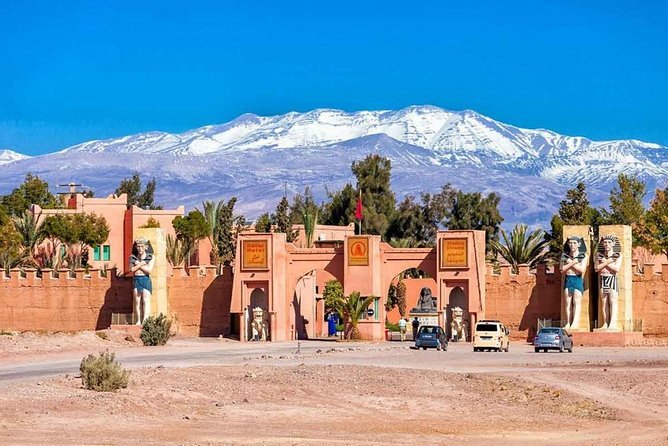
The Agafay is a vast rocky plateau of grey and ochre stone stretching southwest of Marrakech — a mineral desert rather than a sand desert, the ancient bedrock of the African plate exposed by erosion at 600m altitude, just 40 minutes from the Djemaa el-Fna. The combination of the rocky desert floor and the snow-capped High Atlas backdrop directly behind it creates one of the most photogenic environments near Marrakech. It is a completely different experience from the Sahara sand dunes but equally dramatic in its own geological way.
What is Elgzira Beach and how remote is it?
Elgzira is a wild Atlantic beach southwest of Tiznit, accessed by a short drive from the main road. At low tide a natural sandbar connects it to a small rocky island offshore — the name means “the island” in Moroccan Arabic. The beach is undeveloped, uncrowded, and one of the finest stretches of wild Atlantic coast in Morocco. It is not difficult to reach — the road is paved — but it is completely free of the resort development that characterizes beaches further north. Swimming is possible but the Atlantic surf can be strong; always check conditions with your guide.
Which mountain pass should I choose for the return to Marrakech — Tizi n’Test or Tizi n’Tichka, Or ( highway)
Choose the Tizi n’Test if you have not done it before and your schedule allows an early morning departure from Taroudant. It includes the Tin Mal Mosque — one of the most historically significant and least-visited sites in Morocco — and the views of the entire Souss Valley from the summit are extraordinary. Choose the Tizi n’Tichka if you have already driven the Test, or if you want a more direct return. We confirm your preference when booking and plan the Day 8 departure time accordingly.
Is this tour suitable for families with children?
Yes. The Agafay camel ride on Day 2 is particularly popular with children. Elgzira Beach on Day 7 is excellent for families. The Atlantic coast driving days are comfortable with regular stops and varied scenery. Essaouira is very family-friendly — its medina is compact, the beach is wide and long, and the pace is relaxed. Please share your children’s ages when booking so we can tailor accommodations and activities accordingly.
Contact us with your arrival date in Marrakech, your group size, your preferred hotel category, and your choice of mountain pass for Day 8. We will confirm availability and send your personalized quote within 24 hours.
What Is Not Included
Choose the comfort level that best fits your travel style. Both options follow the exact same incredible itinerary and include your private vehicle, driver, and local guides.
Stay in hand-picked, authentic 3-star and 4-star traditional Riads and hotels. Perfect for travelers wanting comfort, local charm, and great value.
Upgrade to premium 4-star and 5-star boutique Riads and high-end hotels. Features larger rooms, excellent amenities, and enhanced comfort.
Premium Upgrade Available: Want to experience Morocco like royalty? Contact our team for a custom quote to upgrade your tour to our Ultra-Luxury Tier. This includes world-class 5-star luxury palaces and VIP glamping in the Sahara Desert.
based on double occupancy during the standard travel season. Final pricing may vary depending on your exact travel dates (such as peak holiday seasons like Christmas, New Year's, and Easter) or for solo travelers requesting private rooms.
You cannot copy content of this page